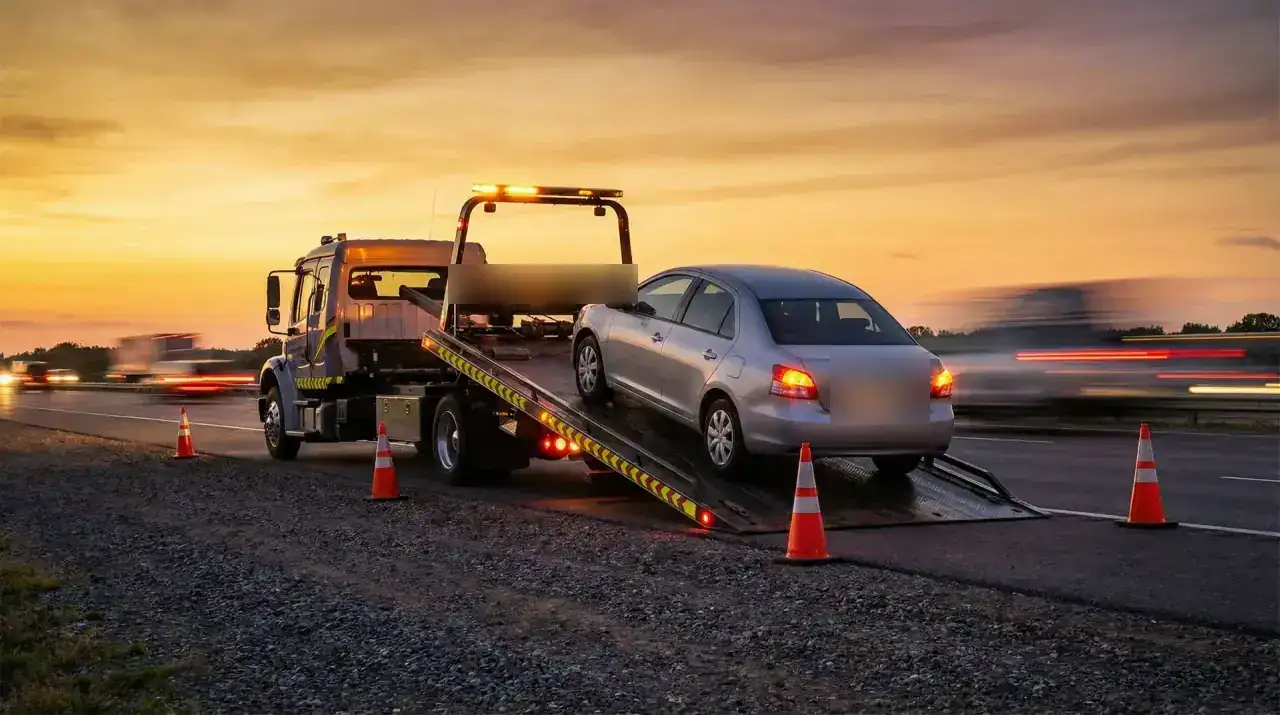
When a family car will not start on a January morning, one person is late. When a company van will not start, a whole day can fall apart: a crew sits idle, a customer waits at home for a no-show, and the parts or tools inside the van go nowhere. For a plumber, landscaper turned snow-removal outfit, caterer or delivery business running a handful of vans and pickups around Columbus, winter breakdowns cost more than the tow.
This guide is a practical fleet winter readiness checklist for small businesses: what to check on every vehicle before the first hard freeze, what each driver should carry, and how to set up a breakdown plan so nobody is scrambling on the shoulder of I-270. If you would rather have towing and roadside help arranged ahead of time, our fleet contract towing accounts are built for exactly that.
Why winter hits work vehicles harder
Business vehicles live a different life than personal cars. They start and stop all day, idle at job sites, sit loaded overnight in open lots and get driven by several people who may not notice a warning light or a tired-sounding starter. Cold weather finds every weak spot that piled up over the rest of the year.
- Lots of short hops. A van that makes ten stops a day may never run long enough between them to fully recharge its battery.
- Heavy electrical loads. Inverters, ladder-rack lights, phone chargers and tablet mounts all draw from the same battery that has to crank a cold engine.
- Overnight parking outside. Vehicles parked in an open yard or at a driver's home get no shelter from wind and ice.
- Shared responsibility. When several drivers use the same vehicle, small problems such as a slow crank or a low tire tend to go unreported until they become big ones.
The pre-winter vehicle checklist
Do this before the first real cold snap, not after the first no-start. A shop can handle most of it in one visit per vehicle, and some of it a driver can check in a few minutes.
- Batteries. Get every battery load-tested, not just looked at. A battery that is weak in the fall is the one most likely to quit on the first frigid morning. Our guide to testing a battery before winter explains what the results mean. Clean corroded terminals and make sure hold-downs are tight, since work vehicles bounce around more than commuter cars.
- Tires. Check tread depth and pressure on every vehicle, including the spare. Cold air lowers tire pressure, so set it to the number on the door-jamb sticker when the tires are cold. Loaded vans and pickups need the pressure listed for their load, not a guess.
- Wipers and washer fluid. Replace streaking blades and fill reservoirs with fluid rated for freezing temperatures. Salt spray on I-71 or I-70 can blind a driver in seconds if the washer runs dry.
- Fuel. Make a simple rule that tanks do not go below about a quarter full in winter. For diesel vans and pickups, follow the engine maker's guidance on winter fuel and anti-gel additives.
- Lights and heat. Walk around each vehicle to check headlights, brake lights and hazards, and make sure the heater and defroster both work. A van with a weak defroster is a safety problem, not just a comfort one.
- Coolant and belts. Have the shop confirm the coolant is the right type and strength for winter and that belts and hoses are not cracked.
- Warning lights. Anything lit on the dashboard should be diagnosed now, while it is still an appointment instead of a breakdown.
What every driver should carry
Each vehicle should have the same basic kit, stored in the same place, so any driver can find it. Our winter car emergency kit post covers the personal side in more detail. For a business vehicle, plan on:
- An ice scraper and snow brush
- A charged portable jump pack, recharged on a schedule
- A blanket, gloves, a hat and a few bottles of water
- A flashlight with fresh batteries and reflective triangles
- A small shovel and a bag of sand or cat litter for traction
- A phone charging cable that fits the vehicle
- A laminated card with the breakdown steps, the account code and the tow line number
Do not let tools and supplies crowd out the emergency gear. If the cargo area is full, the kit can go in a bin behind the seat.
Write a breakdown plan before you need it
The worst time to decide who to call is when a driver is stuck on the SR-315 shoulder in sleet. A one-page plan, shared with every driver, removes the guesswork:
- Safety first. If anyone is hurt, the vehicle is stopped in a live travel lane, or the weather has turned dangerous, call 911 before anything else.
- Get as safe as possible. Pull onto the shoulder or the nearest exit or lot, turn on the hazards, and on a busy road stay in the vehicle with the seat belt on.
- Call the tow provider. Give the exact location (highway, direction, nearest exit or mile marker, or a street address), the vehicle, and what happened.
- Tell the office. A text or call to a manager so jobs can be rescheduled and another vehicle sent if needed.
- Note where it is going. Decide in advance which shop each vehicle goes to, so the tow does not have to wait while someone looks one up.
Slide-offs are common after the first snow of the season. If a driver goes into a ditch, our article on what to do after sliding into a ditch walks through when to call 911 and when a winch-out is all that is needed.
Simple habits that prevent winter breakdowns
- Make a quick walk-around part of the morning. Tires, lights and fluid levels take a couple of minutes, and drivers catch problems before they turn into calls.
- Make reporting easy. A shared log, a group chat or a simple form where drivers note slow cranks, new noises or warning lights gives you time to fix things on your schedule.
- Turn off accessories when parked. Inverters and chargers left on overnight are a classic cause of a dead battery in the yard at 6 a.m.
- Rotate vehicles that sit. A spare van that only gets used now and then should be started and driven a real distance every week or so, or kept on a battery maintainer.
- Clear the whole vehicle of snow. Roof, lights, mirrors and windows. Snow sliding off a van roof onto the windshield at speed is dangerous for your driver and the car behind.
Box vans and bigger work vehicles
Larger vehicles add their own winter wrinkles. They take longer to stop on packed snow, sit higher in crosswinds on open stretches of US-33 and US-23, and often cannot fit in the same places a car can. If one of your box vans, cutaways or service bodies breaks down, it needs the right equipment. Our medium-duty towing handles those vehicles in-house, so mention the type of vehicle and roughly how it is loaded when you call.
When it will not start in the lot
Many winter fleet calls never involve a tow. A van that clicks in the yard at dawn usually just needs a jump start, and if the battery fails the test, mobile battery replacement puts a fresh battery in on the spot, wherever the vehicle is parked, so the crew is back on the road without a trip to the shop.
If a van jumps fine but dies again later the same day, treat that as a charging-system problem, not a battery one, and send it to the shop rather than jumping it again.
Setting up a fleet account
You do not need a huge operation to benefit from planning ahead. A fleet towing account with Roadside Towing & Recovery Inc gives your drivers one dispatch line and an account code, priority dispatch, written response-time targets and monthly reporting on every call. Billing runs through RoadsideMC.com on net-15 terms, so there are no loose receipts to chase.
Response times are always estimates, and winter storms slow every road. Most metro calls are reached in about 20–40 minutes, including Dublin; outer communities such as Westerville take about 40–60. On the west and southwest side, including Grove City, it is usually about 15–30 minutes.
Fleet accounts get volume pricing set out in writing. For a business without an account, standard rates apply: roadside calls such as a jump start are $75 flat plus $4 per mile en-route, and a tow is a $125 hook-up fee plus $7 per loaded mile. Veterans with a military or VA ID save 10%. The full rate card, including night and weekend surcharges, is on our pricing page, and dispatch always quotes the price before a truck rolls.
Frequently asked questions
How do I get my company vehicles ready for winter?
Start with the items that strand vehicles most often in the cold: batteries, tires, wipers and washer fluid, and fuel. Have each battery load-tested, check tread and pressure, switch to winter washer fluid and put a basic emergency kit in every vehicle. Then give drivers a written plan for what to do and who to call if they break down.
What should a driver do if a company van breaks down in the snow?
Get to the safest spot possible, turn on the hazards and stay buckled in the vehicle if it is on a busy road. If anyone is hurt or the van is stopped in a live travel lane, call 911 first. Otherwise, call the company's tow provider with the exact location, the vehicle and what happened, then let a manager know.
Should small businesses keep diesel vans and pickups fueled differently in winter?
Diesel can thicken and clog fuel filters in hard cold, so follow the engine maker's guidance on winter fuel and additives and buy fuel from busy stations that sell winter blends. Keeping tanks well above empty helps any vehicle, gas or diesel, because a stranded driver can keep the heater running longer.
What is a fleet towing account and does a small business need one?
A fleet account sets up towing and roadside help in advance, so drivers call one number with an account code instead of searching for a tow company on the side of the road. Ours includes priority dispatch, written response-time targets and monthly reporting. Even a business with a handful of vans can benefit from having that plan in place before the first storm.
Want your vans and pickups covered before the first storm, or need help with one right now? Call (740) 812-9489 any hour, or send your location from the SOS request page.