Every fall there is one last good ride. A dry, sunny afternoon, cool air, leaves on the shoulder of a back road out past Dublin. Then the forecast turns, salt trucks start lining up, and the motorcycle goes into the garage until spring. How you put it away decides how it comes out: a bike parked carelessly in November is the one that will not start in April.
This guide walks through putting a motorcycle away for a Central Ohio winter, step by step, and what to do when the bike has to move and cannot be ridden. If your motorcycle quits or needs to get to a shop or storage, our motorcycle towing service carries it on a flatbed, any hour of the day.
Why winter storage matters for a motorcycle
Short answer: a motorcycle sitting for months is attacked by stale fuel, moisture, a slowly draining battery and pests looking for a warm place to nest. It all shows up at once on the first warm weekend.
Riding through a Columbus winter has its own problems. Road salt and brine eat at chrome, spokes, brake parts and exposed bolts, and a bike has far less protection from road spray than a car does. Cold tires and a patch of slush on an I-270 ramp are a bad mix on two wheels.
Step 1: Wash it and let it dry completely
Dirt, bug residue and any salt from a late-season ride hold moisture against the finish all winter. Give the bike a good wash before it goes into storage, then dry it thoroughly, including the chain, wheels, under the seat and around the engine. A coat of wax on paint and a protectant on chrome add one more layer against moisture.
Step 2: Deal with the fuel
Gasoline does not keep forever. Left untreated in a tank for a whole winter, it can break down and leave varnish in the fuel system, which is one of the most common reasons a bike runs rough or will not start in spring.
- Fuel-injected bikes: the usual approach is to fill the tank, add a fuel stabilizer, and run the engine for a few minutes so the treated fuel reaches the injectors. A full tank leaves less space for damp air and the condensation that rusts a steel tank from the inside.
- Carbureted bikes: many owners also drain the float bowls so fuel does not sit and gum up the small passages in the carburetor.
- Check the manual. Manufacturers sometimes give their own storage instructions, and those come first.
Step 3: Change the oil before storage, not after
Used engine oil carries acids and contaminants from combustion. Letting it sit in the engine all winter gives those a long time to work on internal parts. Changing the oil and filter before storage means the engine rests in clean oil. On liquid-cooled bikes, also check that the coolant is protected against freezing.
Step 4: Look after the battery
Motorcycle batteries are small, and even a parked bike can draw a little power for clocks, alarms or computer memory. Over a long winter that is often enough to drain the battery completely, and a battery that sits fully drained in the cold can be damaged for good.
- If there is an outlet nearby, connect a smart battery maintainer, sometimes called a tender. It keeps the battery topped up without overcharging, and many bikes have an easy pigtail connector for one.
- If there is no power where the bike is stored, take the battery out and keep it somewhere that stays above freezing, and charge it now and then.
- Clean the terminals while you are at it. Corrosion on the posts is a common cause of a weak start.
Batteries in cars and bikes fail for many of the same reasons. Our guide on how to test a car battery before winter explains what a healthy reading looks like, and the same ideas apply to most motorcycle batteries.
Step 5: Tires, chain and the rest of the chassis
- Inflate the tires to the pressure printed on the bike's label or in the manual. Tires slowly lose air in storage, and a soft tire resting in one spot for months can develop a flat spot.
- Get weight off the tires if you can. A rear paddock stand, center stand or front stand lifts the wheels so they are not carrying the bike all winter. If you do not have stands, roll the bike a little now and then so the same section of tire is not always on the floor.
- Clean and lube the chain so it does not rust in place.
- Spray a light protectant on exposed metal like levers, pegs and fasteners. Keep it well away from brake discs and pads, and off the tires.
Step 6: Choose the spot and cover it right
A dry garage is the best place for most riders, whether it is at home in Gahanna or a storage unit closer to work. Wherever it goes, a few details matter:
- Use a breathable cover. A plastic tarp traps moisture underneath and can leave the bike wetter than no cover at all. A fitted motorcycle cover that breathes keeps dust off and lets condensation escape.
- Keep it away from heat sources, such as a furnace or water heater, and away from the path of a car door.
- Block pests. Mice love the inside of an airbox and an exhaust pipe. Plugging the exhaust openings and the air intake with a rag or plug helps; tie a bright reminder tag to the handlebars so nobody tries to start the bike with the plugs still in.
Getting the bike to storage or the shop
Riders often store away from home or send the bike to a shop for winter service. Riding it there on salted roads defeats the purpose, and sometimes the bike simply will not run.
If you have a pickup or trailer, ramps, a wheel chock and soft straps, moving it yourself with a helper works. Loading a heavy bike up a ramp alone is where riders get hurt and bikes get dropped, so do not try it solo.
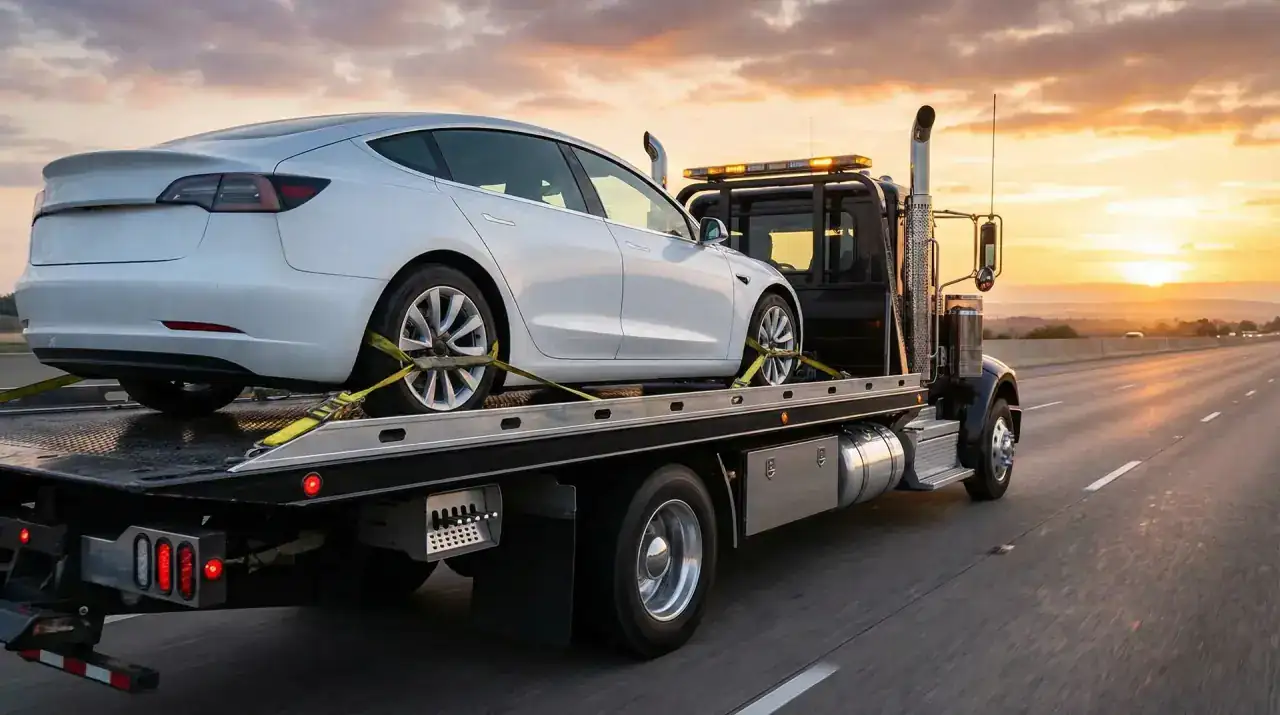
If you do not have the gear, our motorcycle towing is built for this. Every bike rides on a flatbed, with the front wheel seated in a motorcycle wheel chock and the bike secured with soft straps, so it travels upright with both wheels on the bed. We can take it to your shop, a dealer, your garage or a storage unit. If you are moving out of Central Ohio for the winter and the bike is going with you, ask about long-distance towing.
If you ride through the winter anyway
Some riders keep going on dry, mild days. If that is you, rinse the bike after any ride on treated roads, since salt left on overnight starts working right away. Watch for shaded spots and bridges that stay icy after the rest of the road dries. If the bike will not start on a cold morning, the same rules as a car apply: our guide to jump-starting safely in winter covers the basics, and our jump start service handles motorcycles as well as cars.
If you go down on the road, someone is hurt, or the bike is stopped in a live travel lane, call 911 first.
Waking it up in spring
When the weather turns, reverse the process before the first ride: pull the exhaust and intake plugs and the reminder tag, reinstall or check the battery, set tire pressure, and look over the brakes, lights, cables and fluid levels. If it was stored properly, it should start with little fuss. If it cranks but will not fire, or the battery is dead and will not take a charge, a shop visit is the next step, and we can get it there.
What it costs and how fast we get there
Dispatch answers around the clock. Most metro calls, including Dublin, are reached in 20–40 minutes, outer communities such as Gahanna in 40–60, and the southwest side, including Grove City, in 15–30. Those are estimates, not promises; snow and traffic can add time.
A motorcycle tow is priced like any other tow, with no motorcycle surcharge: en-route at $4 per mile from our yard, a $125 hook-up and $7 per loaded mile. A jump start is a flat $75 plus the same en-route charge, and veterans get 10% off with a military or VA ID. Night, weekend and highway surcharges are listed on our pricing page, and dispatch quotes the full price before a truck rolls.
Frequently asked questions
Should I fill the gas tank before storing my motorcycle for winter?
For most fuel-injected bikes, the common advice is to fill the tank and add a fuel stabilizer, then run the engine briefly so treated fuel reaches the fuel system. A full tank leaves less room for moist air, which helps limit condensation and rust inside the tank. Older carbureted bikes may call for draining the carburetor instead, so follow your owner's manual.
Do I need to take the battery out of my motorcycle over winter?
Not always. If the bike is stored where you can plug it in, a smart battery maintainer (often called a battery tender) can stay connected all winter. If it is stored somewhere without power, many riders remove the battery and keep it charged indoors. Either way, a battery left alone in the cold for months often will not start the bike in spring.
Can I just start my motorcycle every few weeks instead of winterizing it?
Starting a stored bike and letting it idle for a few minutes is a common habit, but it usually does more harm than good. A short idle does not get the engine hot enough to burn off the moisture that forms inside, and it drains the battery. If you want to keep it ready, ride it on a dry day long enough to fully warm up, or winterize it properly and leave it alone.
How do I move a motorcycle that will not start?
If you have a trailer or a pickup, proper ramps, a wheel chock and soft tie-down straps, you can move it yourself with a helper. Otherwise, a flatbed tow is the safest choice, because the bike rides upright on the bed instead of being towed on its own wheels. Roadside Towing & Recovery Inc carries motorcycles on flatbeds with wheel chocks and soft straps; call (740) 812-9489 for a quote.
Bike will not start, or need it moved before the snow? Call (740) 812-9489, or share your location through the SOS request page.