On a dry summer day, nobody thinks about wiper blades. Then the first salty slush of the season hits I-270, the truck ahead throws a gray sheet across your windshield, you pull the washer stalk, and nothing comes out. For a few seconds you are driving blind at highway speed. Winter visibility trouble rarely looks dramatic, but it is behind plenty of the slide-offs and fender benders that follow a Columbus snow.
This guide covers the simple prep that keeps the glass clear: wipers, washer fluid, defrost, and the snow and ice drivers forget to clean off. If something does go wrong on the road, our roadside assistance team answers around the clock across Central Ohio.
Why winter is hard on visibility
Short answer: winter attacks the windshield from both sides. Outside, there is snow, ice, freezing rain and a constant film of road salt and grime kicked up by other cars. Inside, wet boots, damp coats and your own breath fill the cabin with moisture that condenses on cold glass.
Add short days, low sun glare on wet pavement in the late afternoon, and headlights that may be dirty or hazy, and a driver can lose a lot of what they need to see without noticing it happen gradually. The fixes below are cheap and quick. The point is to do them before the first storm, not on the shoulder of SR-315 during one.
Wiper blades: check them before the snow flies
Blades are made of rubber, and summer sun and heat age that rubber long before winter arrives. A blade that seemed fine in August can streak, chatter or skip once it meets slush.
- Look at the edge. Lift each blade and run a finger along the rubber. Cracks, tears, a hardened feel or a corner peeling away from the frame all mean it is time for new blades.
- Watch them work. Streaks, smears, missed patches or a juddering sound across the glass are the usual signs of a worn or bent blade.
- Do not forget the rear wiper. On SUVs and hatchbacks, the back window collects road spray fast, and the rear blade is easy to ignore until you need it.
- Consider winter blades. Some blades are built with a rubber cover over the frame so ice and snow cannot pack into the joints. They are worth a look if you drive early in the morning or park outside.
Most auto parts stores will help you find the right size for your car, and many blades clip on in a few minutes. If you would rather have a shop handle it along with a broader winter check, our auto repair partners can look at blades, fluid and the rest of the car.
Washer fluid: the winter switch that matters most
Washer fluid is the part of winter visibility drivers skip most often, and it is the one that fails at the worst moment. Road salt does not wipe away on its own; dry wipers just smear it into a gray haze that glows in oncoming headlights.
- Use fluid labeled for winter or freezing temperatures. Summer and bug-wash fluids, and plain water, can freeze in the reservoir, the lines and the nozzles.
- Do not water it down. Diluting winter fluid to stretch it also weakens its protection against freezing.
- Top it off often. A slushy commute down I-71 can use far more fluid than you expect. Keep a spare jug in the trunk, which is already on the list in our winter car emergency kit guide.
- Check the spray. If the nozzles only dribble, they may be clogged or frozen. A shop can clear them; a pin carefully worked into the nozzle opening sometimes does the trick at home.
If you already ran summer fluid into a frozen system, park somewhere warmer, such as a heated garage, and let it thaw before you refill with winter fluid. Do not keep pressing the washer button against a frozen line, which can wear out the pump.
Defrost and defog: clear the inside of the glass too
A windshield can be spotless outside and still fog over from the inside the moment a few passengers climb in. A few habits help:
- Use outside air, not recirculate, when you are defogging. Recirculated cabin air is the damp air causing the problem.
- Let the air conditioning help. On many cars, the defrost setting runs the A/C compressor automatically to dry the air, even with the heat on. If yours does not, turning A/C on with the heat can clear fog faster.
- Clean the inside surface. Haze from vinyl, smoke or fingerprints on the inside of the glass gives moisture something to cling to. A clean microfiber cloth and glass cleaner make a real difference.
- Dry out the cabin. Knock snow off your boots before you get in, and bring soaked floor mats inside to dry instead of leaving them to steam up the car every morning.
- Use the rear defroster and heated mirrors if your car has them. They clear the glass behind you while the front catches up.
Clearing ice and snow the right way
On a frozen morning in Worthington or a parking lot in Westerville, it is tempting to scrape a small window and go. Take the extra minutes:
- Start the car and turn on the defroster first, outdoors, never inside a closed garage. The warming glass softens the ice while you work.
- Brush snow off the roof, hood and trunk, not just the windows. Snow on the roof slides down over the windshield at the first stop, and sheets of ice blowing off a car are a real hazard to drivers behind you.
- Scrape every window and both mirrors, then the headlights and taillights so other drivers can see you.
- Clear the sensors and cameras. Many newer cars have driver-assistance sensors in the grille, bumpers or behind the windshield. Snow over them can switch those features off or cause warnings.
- Free the wipers last. If a blade is frozen to the glass, let the defroster loosen it rather than prying it off or switching the wipers on. Running frozen wipers can tear the rubber and strain the wiper motor.
Skip the hot water trick. Pouring hot water on a cold windshield can crack the glass, especially if it already has a chip, and the water refreezes around the seals and on the pavement under your feet.
Headlights you can see, and be seen, with
Visibility is not only about what you can see; it is about whether other drivers can see you. Salt spray coats headlight and taillight lenses just like it coats the windshield. Wipe them at every fuel stop on a long winter drive. Headlights that look yellow or cloudy throw noticeably less light on the road, and a shop can restore or replace the lenses. Turn your headlights on whenever you use your wipers in snow or rain, and do not rely on automatic daytime running lights, which may leave your taillights dark.
If you lose visibility on the road
Sometimes the prep is not enough: a wiper arm snaps, the fluid freezes on a long stretch of US-33, or the defroster quits. If you cannot see well enough to drive safely:
- slow down gradually, turn on your hazards and leave extra room to the car ahead;
- get off at the next exit or into a parking lot rather than stopping on a narrow shoulder, if you can do it safely;
- once stopped, check for a frozen blade or snow packed at the base of the windshield, but do not keep switching the wipers on against a blockage;
- if you have slid off the road while trying to see, our guide on what to do when your car slides into a ditch walks through the next steps.
If you are stopped in a live travel lane, someone is hurt, or you are stranded in a winter storm, call 911 first.
When to call for help
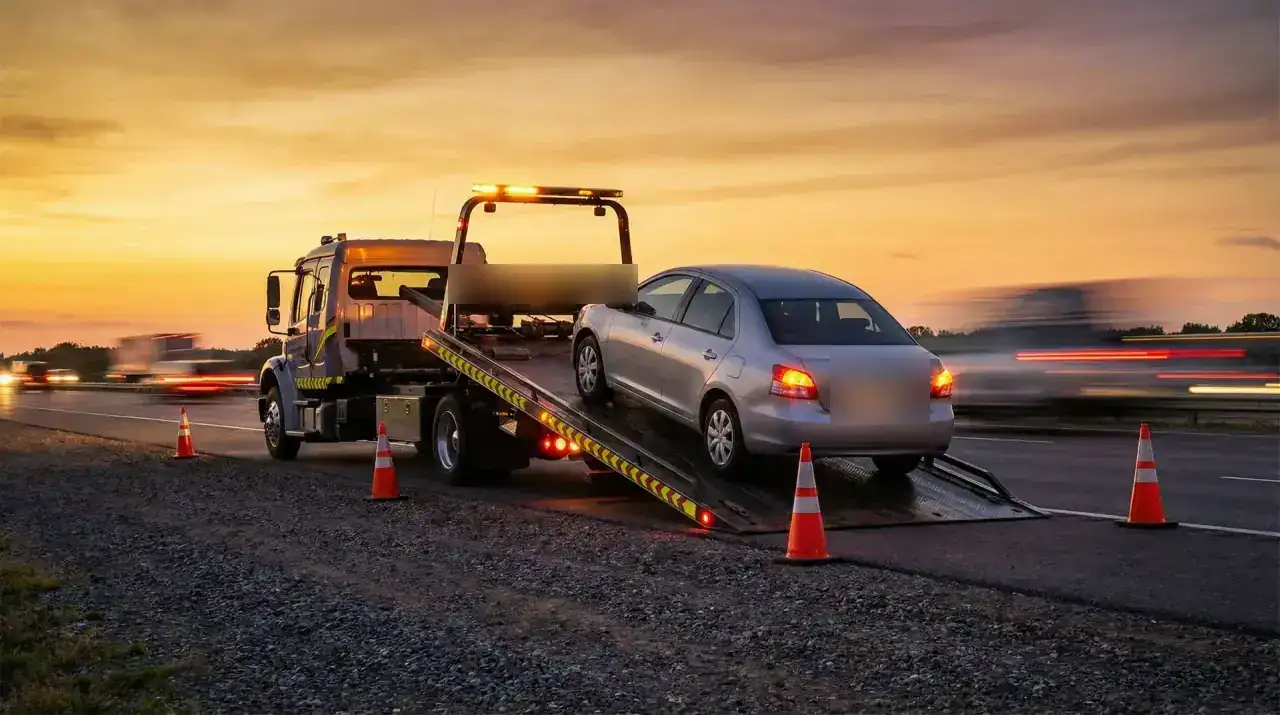
Visibility problems often come with company: the cold that froze your washer lines may also have drained the battery, and a slide-off in poor visibility can leave a car stuck in a snowbank. Our roadside assistance calls cover jump starts, lockouts, fuel and tire changes where the car sits. If the car needs to go to a shop because the wipers or defroster cannot be fixed on the spot, emergency towing takes it there on the same call, and winch-out recovery pulls a car back onto solid ground after a slide.
Dispatch runs around the clock. Most metro calls, including Worthington, are reached in 20–40 minutes, outer communities such as Westerville in 40–60, and the west and southwest side, including Hilliard, in 15–30. Treat those as estimates; heavy snow and slick roads can add time.
A jump start, lockout or tire change is a flat $75 plus en-route at $4 per mile from our yard. A standard tow to a shop is the same en-route charge plus a $125 hook-up and $7 per loaded mile, and veterans get 10% off with a military or VA ID. Surcharges for nights, weekends and highway calls are spelled out on our rate card, and dispatch quotes the full price before a truck rolls.
Frequently asked questions
What kind of washer fluid should I use in winter?
Use a washer fluid labeled for winter or freezing temperatures, and switch before the first hard freeze. Summer or bug-wash fluid and plain water can freeze in the reservoir, lines and nozzles, leaving you with no spray when salt hits the glass. Do not water winter fluid down, because that weakens its freeze protection.
Should I pour hot water on a frozen windshield?
No. A sudden temperature change can crack cold glass, and any chip in the windshield makes that more likely. The water can also refreeze on the glass and in the door seals. Start the car, run the defroster and use an ice scraper on the softened ice instead.
Why does my windshield fog up on the inside in winter?
Moisture from your breath, wet boots, snowy floor mats and damp coats condenses on cold glass. Set the defroster to outside air rather than recirculate, and on many cars the defrost setting also runs the air conditioning to dry the air. A clean inside surface fogs less, so wipe the glass and dry out wet mats.
Should I lift my wipers up before a snowstorm?
Many drivers prop the wipers off the glass before freezing rain or snow so the blades do not freeze to the windshield, which makes cleanup easier. Some cars have a service position for the wipers, so check the owner's manual before lifting them. Either way, never run the wipers while the blades are frozen to the glass.
What should I do if my wipers stop working while driving in snow?
Slow down, turn on your hazards and get off the road at the first safe spot, such as an exit or a parking lot, not a narrow shoulder. Check for a blade frozen in place or packed snow at the base of the windshield, but do not keep switching the wipers on against a blockage. If you cannot see well enough to drive, call for help; if you are stopped in a live travel lane, call 911 first.
Can't see the road, or stuck on the shoulder in bad weather? Call (740) 812-9489, or share your location through the SOS request page.