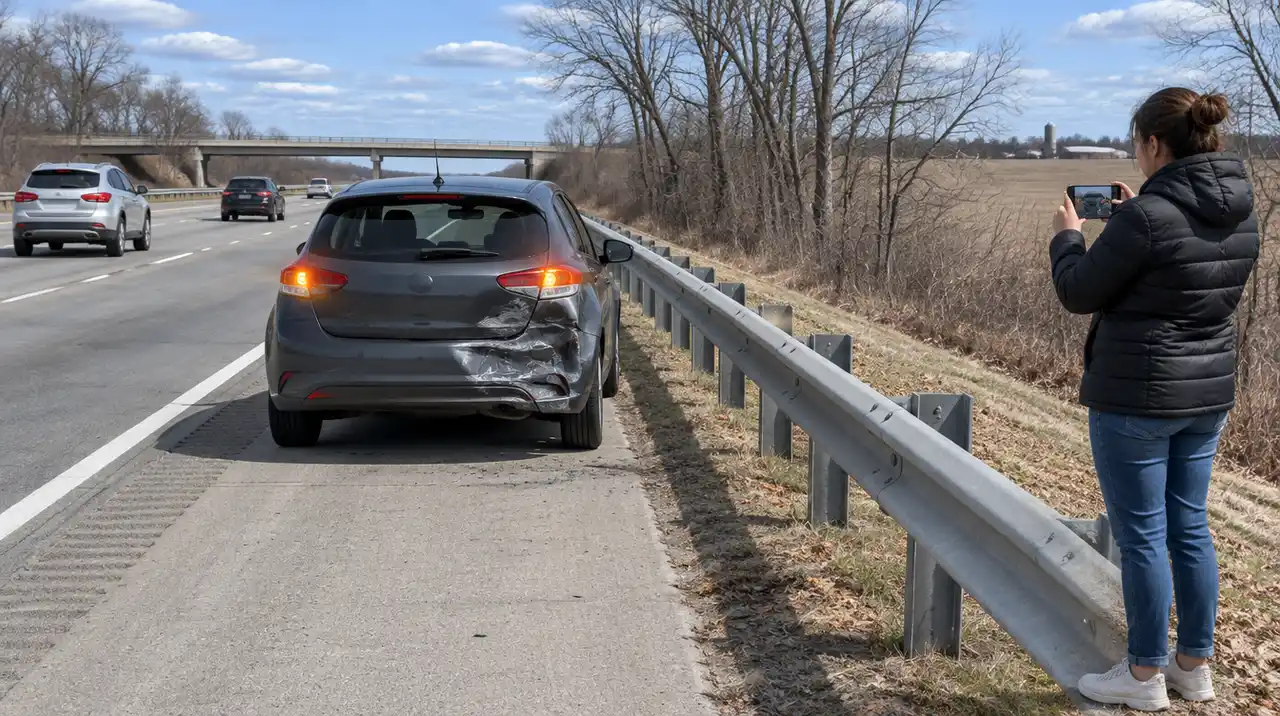
It happens in a second: a shape at the edge of the headlights, a thump, and a cracked grille. In November, deer are on the move around Columbus, and the roads that skirt woods, fields and water on the edge of town see the most of them. If you just hit one, this guide walks you through the next half hour: staying safe, checking the car, the calls to make, and when the right answer is our accident towing in Columbus rather than a slow drive home.
Right after the hit: stop safely and stay put
Your first job is to keep a bad moment from becoming a worse one. If the car still steers and moves normally, ease it onto the right shoulder, the end of a ramp, or a driveway or side street off the main road. Turn on the hazard lights. If you are on a dark two-lane county road, pull as far off the pavement as the ground safely allows so the next driver over the hill sees your flashers before your bumper.
Then stay buckled in for a moment and check on everyone in the car. People often feel fine with adrenaline running and notice a sore neck or wrist later.
Call 911 first if anyone is hurt, if the car is stuck in a travel lane, if you see smoke or smell fuel, or if the deer is lying in the road where another driver could hit it. A tow can wait; those cannot.
Leave the deer alone
It is a natural impulse to check on the animal or drag it off the road. Do not. An injured deer can get up suddenly and kick or thrash with real force, and walking into a dark lane to reach it puts you in front of traffic. Watch it from inside the car or from well off the road. If it is blocking a lane, tell the 911 dispatcher so officers can deal with it. If it moved off on its own, let it go.
Look the car over from the safe side
Most deer strikes hit the front of the car, which is where the parts that keep it running live: the radiator and air-conditioning condenser behind the grille, the headlights, the hood latch, and on many newer cars the sensors for adaptive cruise control and automatic braking. Do the walk-around from the side away from traffic, or look from behind the guardrail. A phone flashlight helps.
- Liquid under the front of the car. Green, orange or pink fluid usually means a punctured radiator. The engine can overheat within a few miles, and that turns a body-shop repair into an engine repair.
- Headlights. A car with one or both headlights out is hard to see and hard to drive on an unlit road. That alone is a reason not to drive it home at night.
- The hood. A buckled hood or one that will not lock down can lift at highway speed and blind you.
- Bumper, grille and undertray. Plastic pieces hanging low can catch on the road and tear loose, or rub against a tire.
- The wheels. A deer that went under a front corner can bend steering or suspension parts. A wheel that leans or sits back in its opening means the car should not move under its own power.
- The windshield. A deer that rolled up over the hood can crack the glass badly enough to block your view.
Fur and blood in the grille look alarming but are not a reason to tow by themselves. Leaks, lights, latches and wheels are. For the full drive-or-tow checklist, including the dashboard warning lights to watch for, see is my car safe to drive after an accident.
If the airbags went off or a warning light comes on
Treat deployed airbags as a sign the car should not be driven. Spent airbags offer no protection in a second impact until a shop replaces them, and a deployment can also trip systems that keep the engine from running normally. The same goes for a temperature warning, a gauge that keeps climbing, an oil-pressure light or a brake warning. Turn the engine off and plan on a tow.
Who to call, in order
- 911, if anyone is hurt, the car is in a lane or the animal is blocking the road.
- Your insurance company. Policies treat hitting an animal differently from a crash with another car, so ask which part of your policy applies, whether it wants a police report, and what photos it needs. Write down the claim number.
- The police, if your insurer wants a report and nobody called 911. Use the local non-emergency line for the area you are in.
- A tow, if the car failed any of the checks above.
If an officer comes to the scene, they decide when the car can leave and sometimes how a car that cannot be driven gets moved. Our guide to police-called tows after a crash in Columbus sets out who chooses the wrecker in each situation. We respond to crash scenes 24/7; when the officer allows you to choose, you can request us at (740) 812-9489.
Photos that help the claim
While you wait, and only from a safe spot, take photos: the front of the car from a few angles, close-ups of the damage, any fur or hair in the grille or bumper (it shows what you hit), the road and shoulder, and a wide shot that shows where you are. If the deer is still nearby, a photo from a distance helps too. Note the road, the nearest cross street or mile marker, and the time.
Telling dispatch where you are
Deer strikes often happen on the roads where an address is hardest to give: a two-lane county road between farm fields north of Westerville, a dark stretch near Delaware, US-33 heading out toward Canal Winchester, or the outer ramps of I-270. Give dispatch the road you are on, the direction you were heading, and the last exit, cross street or landmark you passed. Most phones can also share a map pin, or you can send your location from our SOS request page.
Response times are estimates, never a promise: most metro calls are reached in 20–40 minutes and outer communities in 40–60. While you wait, stay in the car with your belt on and the flashers going if you are on a busy shoulder. If the car went off the road into a ditch or a field, our winch-out recovery crew can pull it back to solid ground, and our post on what to do when your car slides into a ditch covers that situation in detail.
How we tow a deer-damaged car
Front-end damage changes how a car can be hooked up, so our driver looks at the damage before choosing. A car with a crushed front end, a bent wheel or a drivetrain that should not turn usually rides on a flatbed. All-wheel-drive cars should not be towed with two wheels on the ground, so tell dispatch if yours is AWD. Electric cars and hybrids travel with all four wheels off the ground, on a flatbed or on a wheel-lift with dollies following the manufacturer's guidance; our EV and Tesla towing page explains why.
Once your car is loaded, the driver picks up the broken headlight glass, grille pieces and other debris your car left behind and lays absorbent over any small drips it left on the shoulder. If you already have a body shop, we can take the car straight there, which saves a second move. If you do not, it usually goes to our storage lot at 1620 Harrisburg Pike to wait for your insurer's instructions, and dispatch can also route it to a shop in our auto repair partner network.
What it costs and who pays
On accident tows, deer strikes included, we bill your insurer, so have the claim number handy when you call. Our standard tow is $125 to hook up plus $7 per mile towed, storage is $45 per day and starts the day the car is towed, and veterans get 10% off with a military or VA ID. Night and weekend surcharges are on our pricing page, and dispatch quotes the price before hookup. Because storage runs daily, the quicker your insurer names a shop, the fewer storage days end up on the claim.
Lowering the odds next time
Through the rest of fall and into early winter, slow down on roads that run past woods, fields and creeks, especially at dawn and dusk, and use high beams on empty rural roads so eyes at the roadside show up sooner. Where one deer crosses, others often follow, so after one goes by, keep your speed down. If a collision cannot be avoided, brake firmly and hold your lane rather than swerving into a ditch or oncoming traffic. Our fall driving guide for Central Ohio has more on the season.
Everything about how we handle a wreck, from the scene to the body shop, is on our accident and collision towing page.
Frequently asked questions
What should I do right after hitting a deer?
Get the car off the road if it still moves safely, turn on the hazard lights and stay buckled in while you check that everyone is okay. Call 911 if anyone is hurt, the car is stuck in a lane, or the deer is lying in the road. Do not walk out to the deer or try to drag it off the pavement.
Should I call the police after hitting a deer in Ohio?
Call 911 right away if anyone is hurt or the car or the animal is blocking traffic. If nobody is hurt and the road is clear, ask your insurance company whether it wants a police report for the claim, and call the local police non-emergency line if it does. An officer at the scene decides when the car can leave and, in some cases, how it gets moved.
Can I drive my car after hitting a deer?
Only if it passes a careful look. Most deer strikes hit the front of the car, so check for coolant under the engine, broken headlights, a hood that will not latch and a bumper or grille dragging on the road. If a warning light comes on, the temperature climbs, or the airbags went off, have it towed instead of driven.
Will my insurance cover hitting a deer?
It depends on the coverage you carry, and policies handle an animal strike differently from a crash with another car. Call your insurer from the scene or as soon as you are safe, ask which part of your policy applies and what it needs from you, and write down the claim number. We bill the insurer for accident tows, so the claim number is what dispatch will ask for.
Is deer season worse in the fall around Columbus?
Yes. Fall is when deer are most active and on the move, and the shorter days put more commutes in the dark right when they are crossing. Roads that run past woods, fields, creeks and reservoirs on the edges of Columbus deserve extra attention at dawn and dusk.
About this guide: it is general safety and car-care guidance, not a mechanic's inspection or insurance advice. Your insurer and a qualified repair shop have the final word on your claim and your car.
Hit a deer and not sure the car should move? If anyone is hurt or a car is in a lane, call 911 first. Otherwise call (740) 812-9489 any hour, or send your location from the SOS request page.