The snow is coming sideways, the road ahead has disappeared, and your car is not going anywhere. Maybe you slid onto the shoulder of US-23 north of the city, or traffic on I-71 has simply stopped and will not move. Being stranded in a winter storm is frightening, but most people who end up in this spot get home fine because they do a few simple things right. This guide walks through those things in order. When the danger has passed and the car just needs help, our roadside assistance crew can come to you.
Call 911 first if anyone is in danger
A tow company is the right call for a stuck or dead car. It is the wrong first call when someone could get hurt. Dial 911 before anything else if:
- Anyone in the car is injured, very cold, confused or feeling sick.
- Your car is stopped in a live travel lane, or you cannot tell whether it is.
- The storm is severe, the road is closed or buried, and you cannot get out on your own.
- Someone has a headache, dizziness or unusual sleepiness after the engine has been running, which can be a sign of exhaust fumes in the cabin.
Tell the dispatcher how many people are with you, whether anyone needs medication, and how much fuel you have. Then follow their instructions. Everything below is for the time between that call and help arriving.
Stay with your car
The urge to walk for help is strong, especially if you think you saw a gas station a little way back. Resist it. In blowing snow you can lose sight of the road within a few steps, and a car is far easier for rescuers and plow drivers to spot than a person on foot. The car also keeps you out of the wind, which matters more than almost anything else when it is this cold.
The exceptions are real but rare: the car is on fire, it is filling with smoke, or it is sitting somewhere it is about to be hit and there is a clearly safer place you can reach in a moment, such as behind a guardrail. If you must get out next to traffic, use the door away from the lanes.
Make the car easy to find
- Hazard lights on. If you are worried about the battery, run them for a stretch whenever the engine is running rather than all night with the engine off.
- Tie something bright to the car. A red or orange scarf, a towel or a reflective vest on the antenna or caught in the top of a door tells passing drivers and rescuers someone is inside.
- Keep the roof and windows clear. A car that has become a snowdrift is hard to see from a plow cab. Brush off what you can reach from the door when it is safe to open it.
- Turn on the dome light at night for short periods so the car stands out in the dark, then switch it off to save power.
Running the engine for heat without the danger
The engine is your heater, and it is fine to use it. The danger is the exhaust. Exhaust gas contains carbon monoxide, which has no color or smell, and snow piled around the back of a stopped car can push it up and into the cabin.
- Check the tailpipe before you start the engine, and again every so often while the snow keeps falling. Clear away any snow packed around it.
- Run the engine in short stretches rather than nonstop. Warm the cabin, shut it off, and start it again when the chill comes back. This also stretches your fuel.
- Open a window a crack on the side away from the wind so fresh air keeps coming in.
- Watch each other. If anyone gets a headache, feels dizzy, sick or very drowsy, turn the engine off, open the windows and call 911.
Never let a sleeping passenger stay in a running car with the windows sealed tight and snow building up behind it. If you are alone and tired, shut the engine off before you rest.
Staying warm with the engine off
You will spend a good share of the wait with the engine off, so it helps to think about heat the way hikers do: hold on to what your body makes.
- Layer up with everything you have. Coats, gym clothes, a blanket from the trunk. A hat and gloves make a big difference, because bare heads and hands give up heat quickly.
- Get insulation under and around you. Floor mats, newspaper, cardboard or a spare jacket between you and the cold seat or door helps.
- Huddle together if there is more than one of you, and keep children and older passengers in the middle.
- Keep moving a little. Clench and relax your hands and feet, roll your shoulders and swing your arms. Small movements keep blood flowing without making you sweat.
- Stay dry. Damp clothes pull heat away fast. If you had to dig or step out into the snow, swap wet socks and gloves for dry ones if you have any.
- Drink water if you have it. If you need to use snow, melt it in a bottle or cup before drinking rather than eating it by the handful, which chills you from the inside.
Save your phone, your battery and your fuel
A long wait is a contest between your supplies and the storm, so stretch all three.
- Phone: turn on low-power mode, lower the screen brightness and close apps you do not need. Charge it while the engine runs. Text instead of calling when you can; texts often get through when calls will not.
- Car battery: with the engine off, keep the headlights, heated seats and stereo off. Use the interior lights only briefly.
- Fuel: short engine runs are the best way to make a tank last. Note how much you have so you can tell 911 or our dispatcher.
Send someone you trust a message with where you are, who is with you and what the plan is, so someone outside the storm knows to raise the alarm if they stop hearing from you.
How to describe where you are
Help gets to you faster when the location is clear. Give the road, the direction you were heading, and the last exit, mile marker or cross street you passed. On a Central Ohio freeway that sounds like "I-70 eastbound past the Brice Road exit" or "SR-315 southbound before Lane Avenue." On a county road out toward Delaware or past Grove City, name the nearest crossroad and any landmark, such as a church or a farm lane. Your phone's map app can show your exact position; you can also share it from our SOS request page.
When the storm eases: getting the car moving
Once nobody is in danger and the roads are passable, the problem usually comes down to one of a few things, and each has a fix that does not always need a tow:
- Slid off or buried: if the car is in a ditch, against a snowbank or sitting on packed snow, a winch-out pulls it back to solid ground. Stop spinning the tires; it only digs the car deeper. Our guide on what to do after sliding into a ditch has more detail.
- Ran low on fuel while idling: fuel delivery brings enough gas or diesel to reach a station.
- Battery gave out: a jump start with a battery test tells you whether the car will make it home.
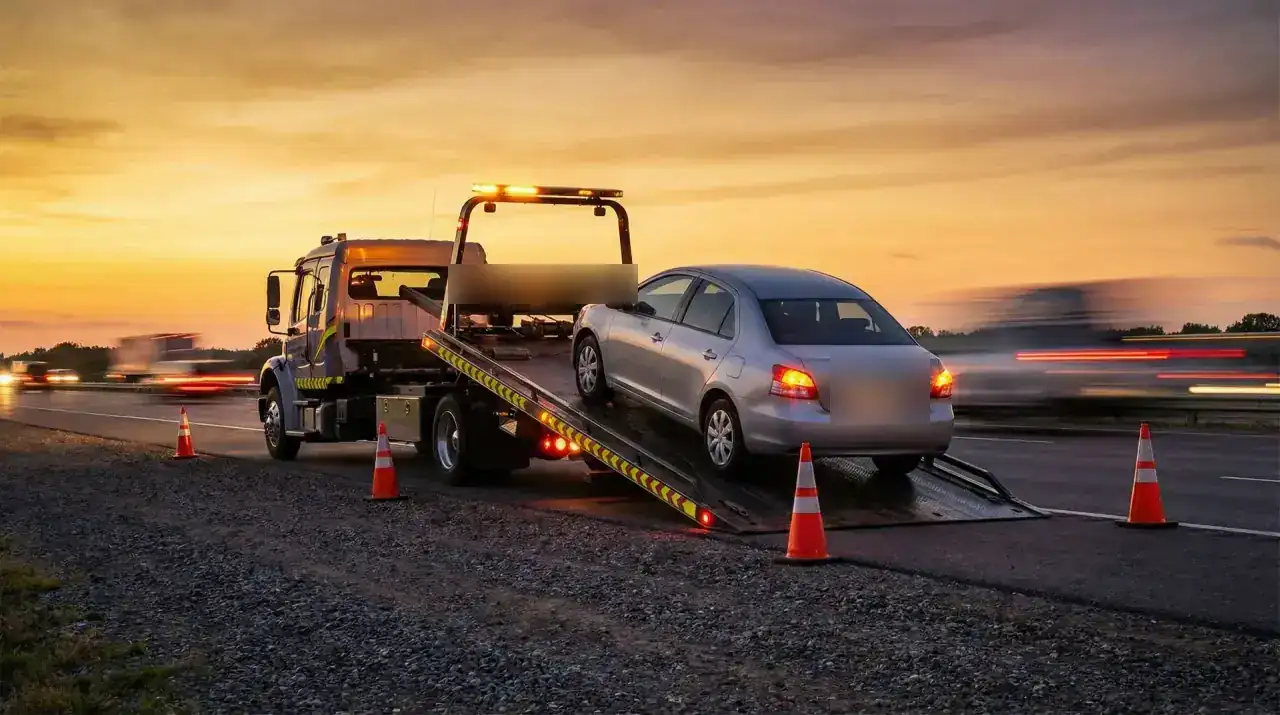
- The car will not drive, or it is somewhere unsafe: our emergency towing crew takes it to your home or the shop you choose.
When you call, tell dispatch what happened, whether the car is on the road, the shoulder or off in the snow, and whether it starts. That lets the driver bring the right equipment the first time.
How long it takes and what it costs
Dispatch answers 24 hours a day, every day. Most metro calls are reached in 20–40 minutes and outer communities in 40–60. Grove City and the rest of the west and southwest side are usually 15–30 minutes, Worthington sits in the 20–40 minute band, and Delaware is an outer community at 40–60. Those are estimates, not promises. During a real storm, closed roads and stacked-up calls stretch them, and the dispatcher will give you an honest time.
Jump starts and similar roadside calls are a flat $75 plus en-route at $4 per mile from our yard. A tow is a $125 hookup plus $7 for every mile the car rides, plus the same en-route charge. Winch-outs and fuel delivery are billed from the published rate card. Every surcharge is on our pricing page, veterans get 10% off with a military or veterans ID, and you hear the price from dispatch before anyone heads your way.
Before the next storm
The best time to plan for being stranded is on a dry afternoon. Keep the tank well above empty all winter, so you have heat to spare if traffic stops. Put a blanket, hat, gloves, a phone charger, water, a few snacks, a flashlight and a small shovel in the car. Our winter car emergency kit list covers the full set. And if the forecast calls for a bad storm, the safest trip is often the one you put off until the plows have been through.
Frequently asked questions
Should I stay in my car if I get stranded in a snowstorm?
In almost every case, yes. The car keeps you out of the wind and is much easier for rescuers and plow drivers to spot than a person walking in blowing snow. Leave it only if it is on fire, filling with smoke or about to be hit and a clearly safer spot is close by.
Is it safe to run the engine to stay warm while stranded?
It can be, if the tailpipe is clear of snow. Check it before starting and keep checking while snow falls, run the engine in short stretches and open a window a crack on the side away from the wind. If anyone gets a headache, dizziness or unusual drowsiness, shut the engine off, get fresh air and call 911.
How do I keep warm in a stranded car without running the engine?
Put on every layer you have, especially a hat and gloves, and get floor mats or a jacket between you and the cold seat. Huddle with passengers, keep making small movements with your hands and feet, and stay as dry as you can, because damp clothing draws heat away quickly.
When should I call 911 instead of a tow company?
Call 911 first if anyone is hurt or very cold, the car is stopped in a live travel lane, you are trapped by a severe storm, or anyone shows signs of exhaust fumes. Call a tow company once nobody is in danger and the car just needs a winch-out, fuel, a jump start or a tow.
Can you reach my car during a snowstorm?
Dispatch answers around the clock. Most metro calls are reached in 20–40 minutes and outer communities in 40–60, but closed roads and a rush of calls during a storm can stretch that, and the dispatcher will give you an honest estimate. If you are in danger while you wait, call 911.
About this article: it is general winter safety advice drawn from everyday experience, with no outside statistics or rules quoted. In an emergency, follow the instructions of 911 dispatchers and first responders, and follow your owner's manual for your car's specifics.
Storm over and the car still stuck? Call (740) 812-9489 any hour, or send your location from the SOS request page. Everything we do at the roadside is on our roadside assistance page.