You start the car on a frosty Columbus morning and a small amber symbol lights up on the dash: a horseshoe shape with an exclamation point in the middle. That is the tire pressure monitoring system, usually shortened to TPMS, telling you at least one tire is running low. Most of the time the fix is a few minutes at an air pump. Sometimes it is the first sign of a nail or a leaking valve. Here is how to tell which, and what to do if a tire gives out on the road. If it does, our tire change service puts your spare on wherever the car is sitting.
Why the light comes on when it gets cold
Air takes up less room when it cools. The tires were filled on a warmer day, so when the temperature falls overnight the air inside contracts and the pressure drops with it, even though no air has leaked out.
That also explains a pattern many drivers notice: the light is on first thing in the morning and then goes out once you have been driving for a while. Driving warms the tires, the air expands again, and the pressure creeps back above the line. The light going off does not mean the problem went away. The tires are still low every cold morning, and they will stay that way until you add air.
Solid light or flashing light?
On many cars the TPMS light can show two different things, and your owner's manual describes how yours behaves.
- A steady light means the system has measured low pressure in one or more tires. Check all four.
- A light that flashes for a while after you start the car and then stays on usually means the system itself has a fault, such as a sensor with a dying battery or a wheel without a working sensor. Your tires may be fine or may not; the system just cannot tell you. Check the pressures by hand and have a shop look at the sensors.
First, is it safe to keep driving?
A light on its own is not an emergency, but what you feel and see matters more than the light.
- The car drives normally and the tires look round: drive gently to the nearest gas station with an air pump and check all four.
- The car pulls to one side, shakes, or you hear flapping or thumping: a tire is flat or failing. Slow down, signal and get off the road at the next safe spot. Driving on a flat destroys the tire and can damage the wheel.
- You are on a freeway such as I-270, I-71 or I-70: do not stop in a travel lane. Ease onto the right shoulder or, better, take the next exit and pull into a lot. Once stopped, put on your hazards and stay buckled in with the doors shut unless you can get well away from traffic behind a guardrail.
- Call 911 first if the car is stuck in a live lane, if anyone is hurt, or if you are stranded in a winter storm.
How to check and fill your tires the right way
Keep a simple tire gauge in the glove box; the gauges on gas station air hoses are not always accurate.
- Find the right number. Open the driver's door and look for the sticker on the door jamb, or check the owner's manual. That is the pressure your car is meant to run. The number molded into the tire sidewall is the most the tire can safely hold, not what you should fill it to.
- Check them cold. Read them before you drive or after the car has sat a while; warm tires read high.
- Check all four, not just the one that looks low.
- Add air in short bursts and recheck as you go, until each tire matches the door sticker.
- Put the valve caps back on. They keep salt and slush out of the valve.
On most cars the light goes off by itself after a short drive once the pressures are right. Some need a reset from a button or menu, as the manual explains. If it stays on after every tire is right, have a tire shop test the sensors.
Cold weather or a real leak? How to tell
- All four down about the same: that is the cold. Fill them, and check again after the next cold snap.
- One tire much lower than the rest: that is a slow leak, not the weather. Look for a nail or screw in the tread; a corroded valve or a bad seal at the wheel rim can also do it. Fill it and get it to a tire shop soon.
- The same tire low again soon after you filled it: it is leaking. Have it repaired or replaced.
- A tire flat to the rim, a bulge in the sidewall, a cut or exposed cords: do not drive on it at all. Put the spare on or have the car towed.
Why low tires matter more in winter
A soft tire flexes more and does not sit flat on the road, so the car is slower to respond when you steer or brake. On slush on SR-315 or a slick ramp onto US-33, that matters. If the roads are icy, our guide to black ice in Central Ohio covers what to do if you start to slide.
Do not forget the spare
Most tire pressure systems watch only the four tires on the ground, so the spare can sit half flat in the trunk for years without any warning. Check its pressure now and make sure the jack and lug wrench are there. A compact temporary spare has limits printed on it or in the manual; it is meant to get you to a tire shop, not to last the winter.
Some newer cars come with no spare at all, just an inflator or a sealant kit. If yours is an electric car, our post on a flat tire on an electric car with no spare walks through what to do. If your wheels have locking lug nuts, keep the wheel lock key in the car.
When a tire gives out: what we can do
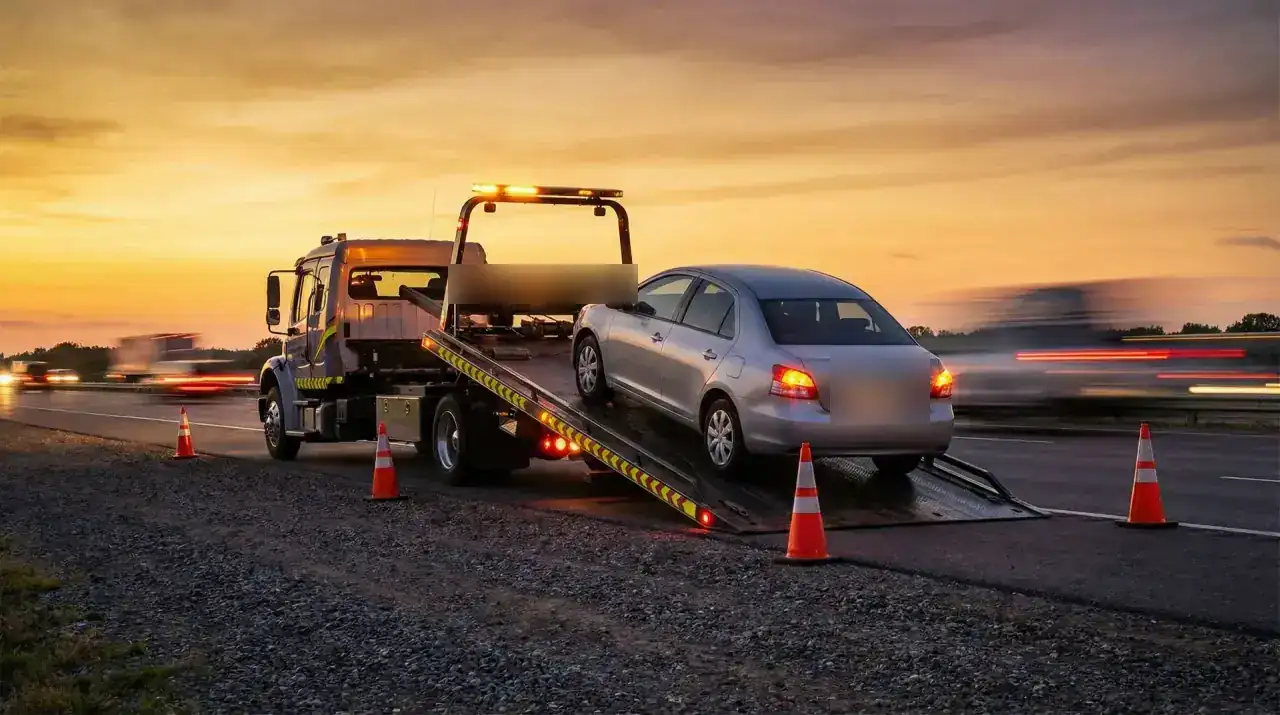
If a tire goes flat and you have a usable spare, our tire change crew mounts it where the car sits, whether that is your driveway, a work lot or the shoulder of the outerbelt. We do not patch or repair tires at the roadside and we do not sell tires. If there is no usable spare, the wheel lock key is missing or the wheel is bent, we tow the car to the tire shop you choose, usually on a flatbed. Tire help is one part of our wider roadside assistance, and if the flat left you stopped somewhere dangerous, our emergency towing crew covers that too.
When you call, give dispatch your location (road, direction and last exit, or the address), the car, which tire is flat, and whether you have a spare and the wheel lock key.
How long it takes and what it costs
Dispatch answers around the clock. Most metro calls are reached in 20–40 minutes and outer communities in 40–60. On the west side, Hilliard is usually 15–30 minutes; Worthington falls in the 20–40 minute band, and Pickerington is an outer community at 40–60. These are estimates, not promises, and snow and rush hour can stretch them.
A tire change with your own spare is a flat $75 plus en-route at $4 per mile from our yard. If the car needs to go to a tire shop, a standard tow is a $125 hookup plus $7 for each mile the car rides on the truck, plus the same en-route charge. After-hours, weekend and other charges are listed on our pricing page, and dispatch quotes the total before a truck rolls. Veterans get 10% off with a military or veterans ID.
A tire gauge belongs in every car this time of year; our winter car emergency kit list covers the rest.
Frequently asked questions
Why does my tire pressure light come on when it is cold?
Cold air contracts, so tire pressure drops when the temperature falls overnight even though no air has leaked out. A tire that was close to the warning point can dip below it on a frosty morning. Fill all four tires to the pressure on the driver's door sticker and the light usually goes off after a short drive.
Why does the tire pressure light go off after I drive?
Driving warms the tires, the air inside expands and the pressure rises back above the warning point. The tires are still low when they are cold, so the light will keep coming back every cold morning until you add air.
Is it safe to drive with the tire pressure light on?
If the car drives normally and the tires look round, it is usually fine to drive gently to the nearest air pump. If the car pulls, shakes or thumps, or a tire looks flat, pull over somewhere safe and do not keep driving on it. Driving on a flat ruins the tire and can damage the wheel.
What does a flashing tire pressure light mean?
On many cars, a light that flashes for a while after you start the car and then stays on means the monitoring system has a fault, such as a sensor with a weak battery. The system cannot warn you about low tires until it is fixed, so check the pressures by hand and have a tire shop test the sensors.
Can you fix a flat tire at the roadside?
We do not repair or sell tires. If you have a usable spare, we mount it where the car is sitting. If there is no usable spare, the wheel lock key is missing or the wheel is damaged, we tow the car to the tire shop you choose, and dispatch quotes the price before a truck rolls.
About this article: it is general car-care advice drawn from everyday experience, with no outside statistics or rules quoted. For your car's correct tire pressure, warning-light behavior and spare-tire limits, follow your owner's manual and the sticker on the driver's door jamb.
Tire pressure light turned into a flat? Call (740) 812-9489 any hour, or share your location from the SOS request page. Everything about how we handle flats is on our tire change service page.