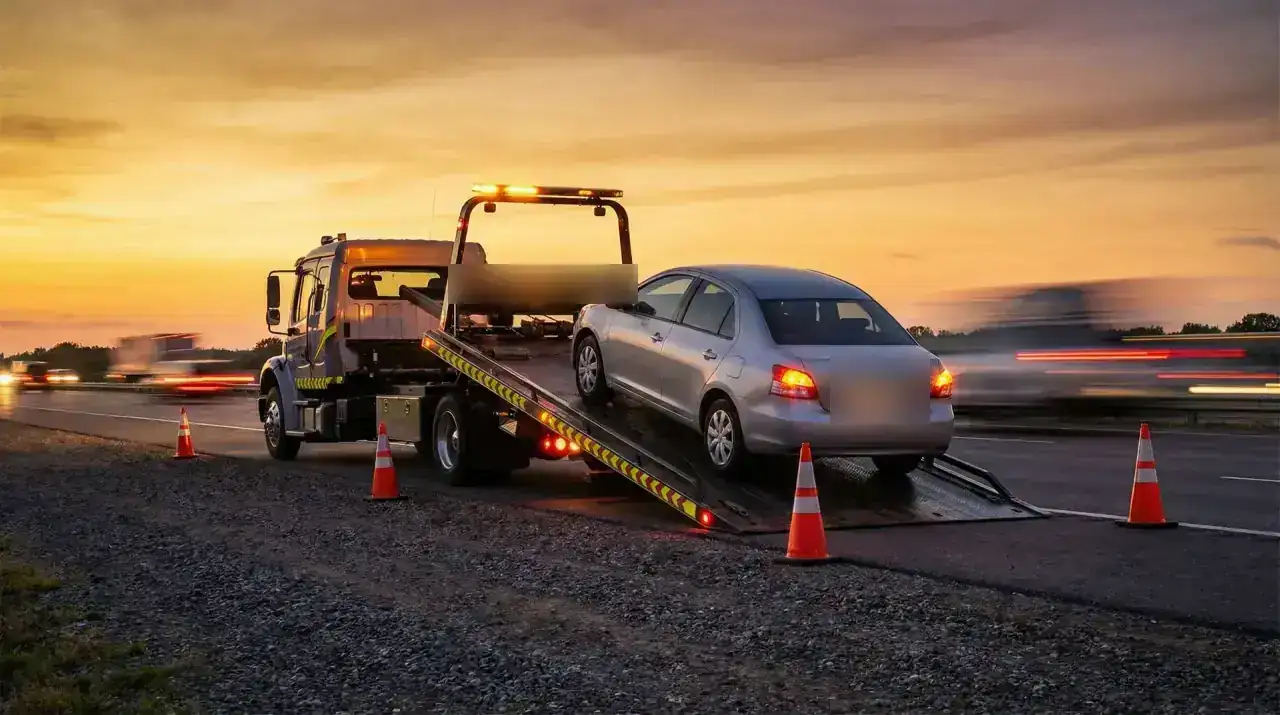
You scrape the windshield, start the car, wait for warm air, and the vents keep blowing cold. On a frozen Columbus morning that is miserable, but it can also be the first sign of a cooling problem that ends with an overheated engine on the side of I-270. If the temperature gauge is climbing or steam is coming from under the hood, pull over and call for emergency towing rather than pushing on. Here is how the heater works, what a cold one usually means, and how to tell a repair you can book next week from one that needs the car off the road today.
Why the heater depends on the engine
A gas or diesel car does not have a separate furnace. It borrows heat from the engine. Coolant circulates through the engine, picks up heat, and part of it flows through a small radiator behind the dashboard called the heater core. The blower fan pushes air across that core and into the cabin.
So anything that keeps hot coolant from reaching the heater core shows up as cold air, and a heater problem is often an engine cooling problem you can feel before the gauge shows it.
Electric cars heat the cabin differently, so this guide is mainly for gas and diesel engines.
The usual reasons for cold air
- Low coolant. The most common cause, and the one that matters most. If the level drops far enough, air gets into the system and the heater core is the first place to go cold, often before the engine starts to run hot. Low coolant almost always means a leak somewhere.
- A thermostat stuck open. The thermostat keeps coolant inside the engine until it warms up. If it sticks open, the engine takes a long time to warm, the gauge sits lower than usual, and the heat stays lukewarm, especially on the highway.
- A thermostat stuck closed. The opposite failure. Coolant cannot get to the radiator, and the engine overheats. This one is urgent.
- A failing water pump or broken belt. If coolant is not being pushed around, the engine heats up fast and the cabin stays cold. A squeal, a slap from under the hood or a sudden battery light along with the cold air can point here.
- A clogged heater core. Old or mixed coolant can leave deposits that block the core. The engine runs at a normal temperature, but the heat stays weak.
- A blend door or blower problem. Heat on one side only, no change when you turn the dial, or barely any air from the vents points to the controls or fan behind the dash rather than the coolant.
Stop driving now if you see any of these
Cold air on its own is often a repair you can schedule. Cold air together with any of the signs below means the engine is losing coolant or not moving it, and driving on can warp or crack expensive parts.
- The temperature gauge climbs toward hot, or a temperature or coolant warning light comes on.
- Steam or smoke from under the hood, or white smoke from the tailpipe that does not clear after the car warms up.
- A sweet, syrupy smell inside or outside the car. That is the smell of coolant.
- A puddle under the front of the car in green, orange, pink or blue, or a crust of dried coolant around hoses.
- Fog on the inside of the windshield that leaves a greasy film, which can come from a leaking heater core.
- The engine loses power, knocks or shuts off.
If any of that happens while you are moving, signal, get to the right shoulder or the nearest safe lot, and turn the engine off. On a busy freeway such as I-71, I-70 or SR-315, put on your hazard lights and stay belted in the car with the doors closed while you call. If the car is stopped in a live travel lane, or anyone is hurt, call 911 first.
What you can safely check yourself
- Let the engine cool completely. Never open a hot radiator cap or coolant reservoir cap. The system is under pressure, and coolant can spray out hot enough to burn.
- Look at the overflow reservoir. It is the translucent plastic tank under the hood with marks for low and full. If the level is below the low mark, that explains a lot.
- Top it up only with the right coolant. Your owner's manual names the type. Mixing types or adding plain water in winter can cause problems of its own, because water alone can freeze.
- Look under the car where it was parked overnight for drips or a stain.
Topping up coolant gets you information, not a fix. A system that was low lost that coolant somewhere, and a shop needs to find the leak.
Idling longer will not bring the heat back
Idling the car in the driveway for a long time to "get the heat going" does not help, and a car that will not make heat is not going to start making it while parked. Our post on remote start and idling myths covers what warm-up actually does.
No heat also means no defrost
The defroster uses the same heat. Without it, frost and fog can build up on the inside of the glass on a cold morning, and you cannot drive safely if you cannot see out. Running the air conditioning with the defrost setting can pull some moisture out of the air even when the heat is weak, and wiping the glass with a clean, dry cloth before you leave helps. If the windshield will not stay clear, leave the car parked.
Getting the car to a shop
If the heater is the only symptom and the gauge stays normal, you can usually drive the car to your mechanic on a short trip. If any of the stop-driving signs showed up, have it towed. A tow costs far less than an engine that ran hot for the last few miles.
Call (740) 812-9489 and our emergency towing team takes it from wherever it stopped. We do not repair cooling systems on the roadside; we bring the car to your own mechanic or to one of our auto repair partner shops. All-wheel-drive cars and anything low to the ground can ride on a flatbed, so tell dispatch the make and model. If the real problem turns out to be a car that will not start at all, a roadside assistance call such as a jump may be enough, and our guide to telling a battery from a starter or alternator can help you describe what you hear.
What to tell dispatch
- Where you are: the road and direction, the last exit you passed, or the address or parking lot.
- What the car did: cold air only, or cold air plus a rising gauge, a warning light, steam or a smell.
- Whether the car is in a safe spot or still partly in traffic.
- The make, model and drive type, including whether it is all-wheel drive, a hybrid or electric.
- Where it should go: your mechanic, a dealer, or ask us about a partner shop.
How long it takes and what it costs
Someone picks up the phone at any hour, day or night. Most metro calls are reached in 20–40 minutes, outer communities 40–60. In Hilliard and the rest of the west side it is usually 15–30 minutes, Dublin is in the 20–40 minute band, and Westerville is an outer community at 40–60. Treat every one of those as an estimate; snow and rush-hour traffic can stretch them.
A tow is a $125 hook-up fee plus $7 for each mile the car rides on the truck. Roadside calls such as a jump start are $75 flat plus $4 per mile en-route. Veterans take 10% off the bill by showing a military or VA ID. Our pricing page lists the after-hours, weekend and highway surcharges, and you hear the full quote from dispatch before anyone heads your way.
Heading off the problem before the next cold snap
- Glance at the coolant reservoir when you check the oil or fill the washer fluid, always with the engine cold.
- Ask your shop to test the coolant at your next oil change. They can tell you whether it still protects against freezing and whether it is time for a flush.
- Do not ignore a slow loss. A reservoir you have to top off every few weeks is a leak that will eventually leave you stranded.
Frequently asked questions
Why is my car heater blowing cold air in winter?
The heater warms the cabin with hot engine coolant, so cold air usually means the coolant is low, the thermostat is stuck open, or hot coolant is not reaching the heater core. A blend door or blower fault can also do it. If the temperature gauge stays normal and no warning light is on, it is usually a repair to book soon rather than an emergency.
Is it safe to drive with no heat in winter?
Sometimes for a short trip, but not if the temperature gauge climbs, a coolant or engine warning comes on, or you see steam or smell something sweet. Those point to low coolant and a risk of overheating, which can badly damage the engine. A heater that cannot clear frost or fog off the windshield is also a safety problem, because you need to see out.
Can I add coolant myself on a cold morning?
Only with the engine cold, and only into the overflow reservoir, using the coolant type your owner's manual calls for. Never open a hot radiator cap, because the system is under pressure and can spray scalding fluid. If the level drops again soon after, there is a leak that a shop needs to find.
Can a car overheat in winter?
Yes. Cold air does not protect an engine that has lost coolant or has a stuck thermostat, failed water pump or broken belt. Watch the temperature gauge and warning lights in winter the same way you would in summer.
Can a tow company fix a heater or cooling problem at the roadside?
Not ours. We do not repair heaters or cooling systems. If the car is not safe to drive, we tow it to your mechanic or one of our auto repair partner shops, and dispatch quotes the price before a truck rolls.
A note on this guide: it covers general car care and safety and cannot diagnose your specific car. For the cooling system and the right coolant, follow your owner's manual and a qualified mechanic.
No heat, a climbing gauge or steam on a cold Columbus morning? Call (740) 812-9489 at any hour, or share where you are through the SOS request page.