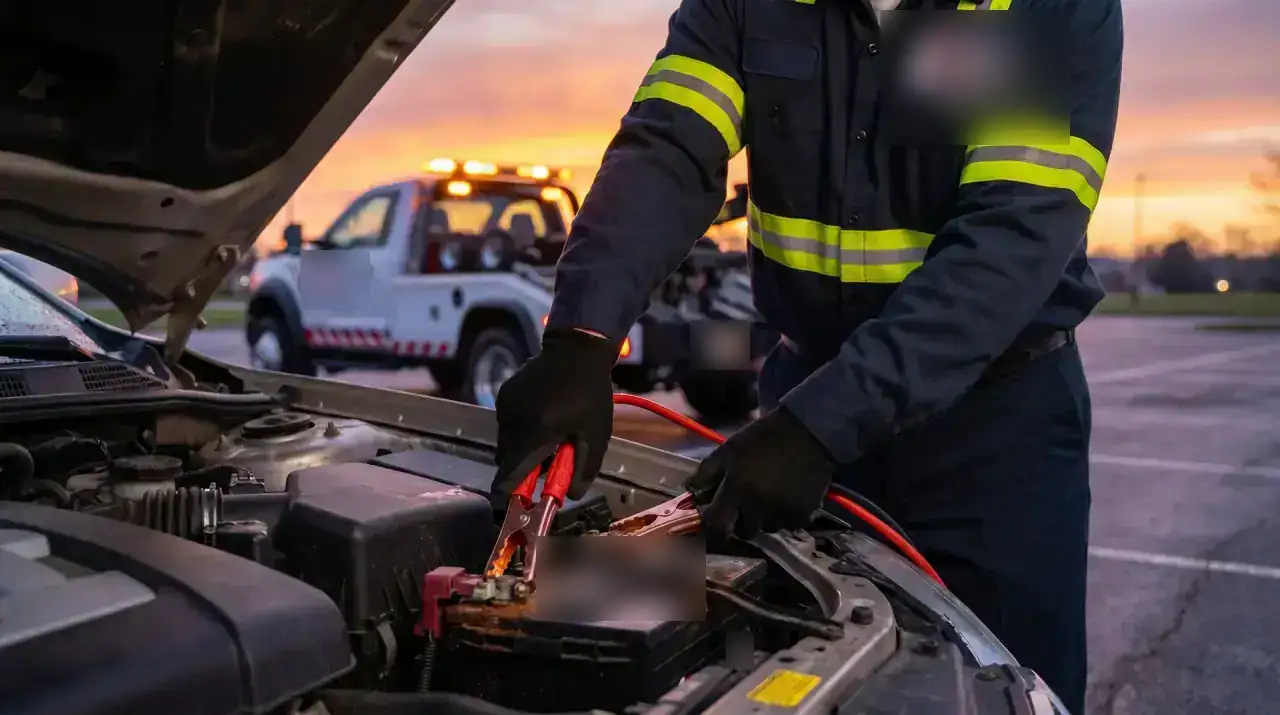
On a frosty Columbus morning, plenty of drivers do the same thing: start the car, go back inside for coffee, and come out to a warm cabin. It feels like the responsible thing to do for the engine. For most modern cars, though, a long warm-up is more habit than help, and some of the beliefs around idling and remote start can actually leave you stuck, with a battery that has quietly run down and a call for a jump start at the worst possible moment.
Here is what warming up really does, what remote start is good for, where the myths come from, and the safety rules that matter more than any of it.
Myth: the engine needs a long warm-up before you drive
The long warm-up comes from the era of carburetors, when a cold engine could stumble, stall or run rough until it heated up. Today's fuel-injected engines use sensors and a computer to adjust the fuel mixture for the cold, so they run smoothly almost right away.
The faster way to bring an engine up to temperature is to drive it, gently. Sitting in the driveway, the engine is barely working, so it warms slowly. On the road, under a light load, it heats up much sooner, and so does the heater. A sensible routine for most cars:
- Start the car and let it settle while you buckle in, adjust the mirrors and set the defroster.
- Clear every window so you can see properly. This, not the engine, is usually what sets the real waiting time.
- Drive easy at first. No hard acceleration or high revs until the temperature gauge starts to move and the heater blows warm.
Your owner's manual is the final word. Some diesels, older vehicles and cars with specific cold-weather instructions need a different approach, so check what the manufacturer says for your car.
What warming up is really for: seeing out
The best reason to let a car run before you leave is visibility. Pulling out of a Worthington side street or merging onto SR-315 with a peephole scraped in the windshield is dangerous. Give the defroster time to clear the glass, then finish the job by hand:
- Clear the whole windshield, the side windows and the rear window, not just the patch in front of you.
- Brush snow off the roof, hood and trunk lid so it does not slide over the windshield or blow into the car behind you on I-270.
- Wipe off the headlights, taillights and mirrors, plus any camera or sensor your car relies on.
- Check the wipers are not frozen to the glass before you switch them on, or you can tear the blades.
Our post on winter wipers, washer fluid and visibility covers the blades and fluid side of getting a clear view.
Myth: idling in the driveway charges the battery
This is the myth that strands the most people. The alternator does recharge the battery while the engine runs, but at idle it spins slowly and makes far less power than it does on the road. Meanwhile, a cold morning piles on the electrical load: blower fan on high, rear defroster, heated seats, heated mirrors and headlights. At idle, the alternator may barely keep up, and the battery may get little real charge back.
That matters because starting a cold engine takes a lot out of the battery in the first place, and cold weather also cuts how much power a battery can deliver. A string of short trips plus idling can leave a battery a little lower every day until one morning it only clicks. Signs it is heading that way:
- The engine cranks slower than it used to, especially first thing in the morning.
- Interior lights or the dashboard dim while the car is starting.
- The battery or charging warning light comes on while you drive.
- The remote starter tries, fails, or gives up more often than it used to.
If any of that sounds familiar, have the battery load-tested rather than counting on idling to fix it. Our guide to testing a car battery before winter explains what the results mean. If a battery fails, mobile battery replacement can put a new one in where the car is parked.
Remote start: what it helps and what it can hide
Remote start is genuinely handy in a Central Ohio winter. It gets the defroster working before you walk out, and many systems keep the doors locked while the engine runs, so the car is not sitting open in the driveway. A few things to keep in mind:
- It does not replace clearing snow. A warm cabin with a snow-covered roof and blocked lights is still unsafe to drive.
- Repeated failed starts drain the battery. If the remote start does not catch and you keep pressing the button, each attempt takes more out of a battery that was already struggling.
- Many systems stop trying when voltage is low. A remote starter that suddenly refuses on a cold morning can be the first warning of a weak battery.
- The fob battery matters too. Cold weakens the small battery in the key fob, so the car may not respond from inside the house. Keep a spare fob battery at home.
- Aftermarket systems need a proper install. A remote starter wired in poorly can cause electrical gremlins or a slow drain while the car sits. If dead batteries started after an install, have the installer check it.
One more common winter scene: the car is running, the heater is on, and the doors lock with the keys inside. If that happens, our lockout service can get you back in. We unlock cars only; if a key is lost or broken, you will need a dealer or locksmith to cut or program a new one.
The safety rules that matter more than any myth
Exhaust contains carbon monoxide, which you cannot see or smell. In winter, the risk goes up because people run cars in tight spaces and snow can block the tailpipe.
- Never run the engine in a garage, attached or detached, even with the big door open. Back the car out first, and never use remote start while the car is still inside.
- Clear the tailpipe. After a heavy snow or when a plow has piled snow behind the car, make sure the exhaust is not buried before you start it.
- If you are stuck and running the engine for heat, keep the tailpipe clear, run it in short stretches and crack a window on the side away from the wind.
- Watch for symptoms. A headache, dizziness, nausea or sudden sleepiness in a running car means get into fresh air right away.
If anyone feels sick from exhaust, is injured, is stuck in a car in a live travel lane, or is caught out in a dangerous winter storm, call 911 first. A tow can wait.
It is also worth thinking twice before leaving a car running with the keys in it and nobody around. An unlocked, idling car in the driveway is an easy target. If you want a warm car without that risk, a remote starter that keeps the doors locked is the better option.
Hybrids, EVs and diesels
- Hybrids may start and stop the gas engine on their own to warm up or charge. That is normal; follow the manual rather than forcing a long idle.
- Electric vehicles do not idle at all. The best move is to precondition the cabin and battery while the car is still plugged in, so the warm-up energy comes from the wall instead of your driving range. If an EV runs flat in the cold, it needs all four wheels off the ground to move, and our EV and Tesla towing uses a flatbed or a wheel-lift with dollies as the manufacturer allows.
- Diesels often have glow plugs, block heaters or grid heaters and their own cold-start steps. Wait for the glow plug light if your truck has one, use the block heater if it is equipped, and follow the engine maker's guidance on idling.
When it will not start anyway
Even with good habits, a cold snap finds every tired battery. If you hear clicking, a slow grind or nothing at all, stop trying after a few attempts so you do not drain what is left, and call for a jump start. The driver tests the battery on the spot, and if it fails, a replacement can usually go in on the same visit. For a flat tire, an empty tank or anything else that leaves you stuck, our roadside assistance covers it.
Response times are always estimates, and snow slows every road. Most metro calls, including Worthington, are reached in about 20–40 minutes, and outer communities such as Gahanna take about 40–60. On the west and southwest side, including Hilliard, it is usually about 15–30 minutes.
A jump start is $75 flat plus $4 per mile en-route, and if the car needs a tow to a shop, it is a $125 hook-up fee plus $7 per loaded mile. Veterans with a military or VA ID save 10%. Night and weekend surcharges are listed on our pricing page, and dispatch quotes the price before a truck rolls.
Frequently asked questions
How long should I warm up my car on a cold morning?
Most modern cars only need to run long enough for you to buckle in and for the windows to be clear. After that, driving gently warms the engine faster than sitting still. Your owner's manual is the final word for your car, especially for diesels and older vehicles.
Does idling recharge a car battery?
Not much. At idle the alternator turns slowly, and with the heater, defroster and seat heaters running it may barely keep up with the load. A battery that is already weak needs a real drive or a proper charger, and if it keeps dying it should be tested.
Is it safe to use remote start with the car in the garage?
No. Do not run an engine in a garage, even with the door open, because exhaust gases including carbon monoxide can build up and seep into the house. Back the car out or park it outside first, and make sure the tailpipe is not blocked by snow.
Why does my remote starter stop working when it gets really cold?
Cold weakens both the key fob battery and the car battery. A tired fob may not reach the car, and many remote starters will not try to crank if the car battery voltage is low. If the car also struggles to start with the key, have the battery tested before it leaves you stranded.
Car will not start on a cold Columbus morning? Call (740) 812-9489 any hour, or send your location from the SOS request page.