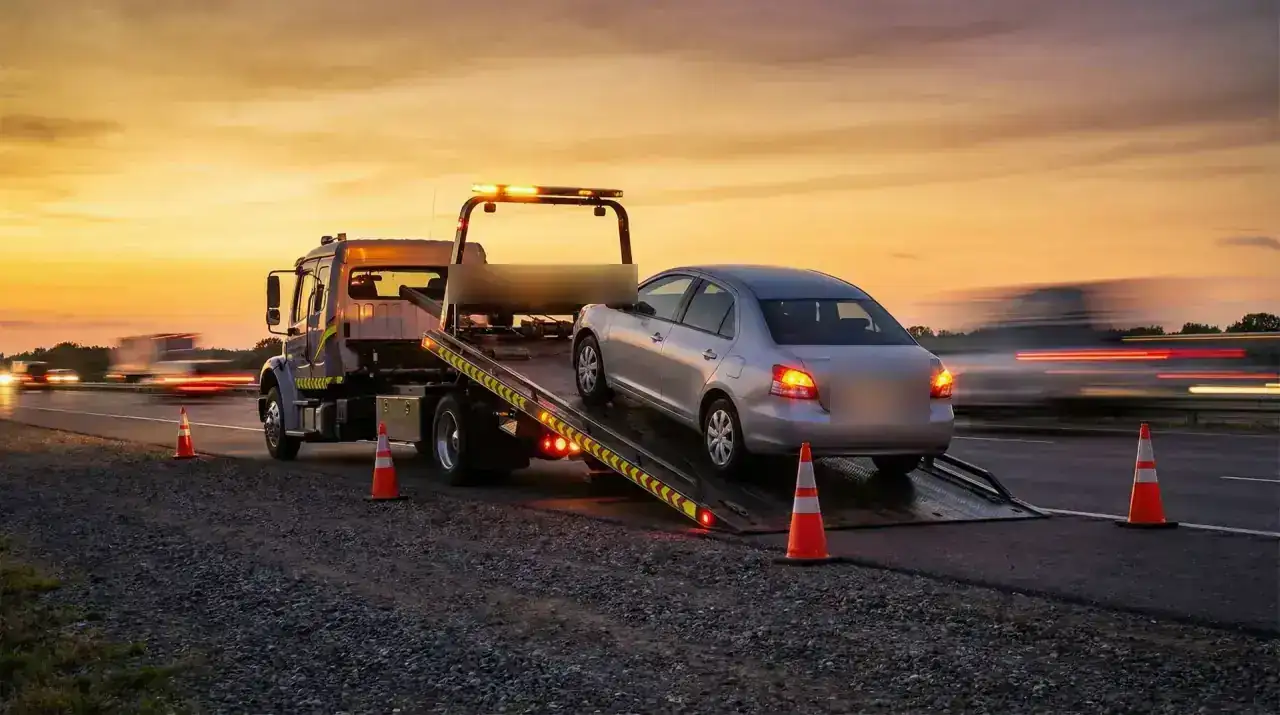
The low-fuel light came on somewhere on I-270, you were sure you could make it home, and now the engine is coughing on the shoulder in the cold. Running out of gas is annoying any time of year. In a Central Ohio winter it is a bigger deal, because the same tank that moves the car is also what keeps you warm while you wait. This guide covers why an empty tank is riskier when it is cold, what to do in the first few minutes, and how our fuel delivery gets you to a station without a tow.
Call 911 first if you are in danger
An empty tank is our kind of problem. A person at risk is a job for emergency services, so phone 911 ahead of us when:
- The car stopped in a live travel lane and you could not get it to the shoulder.
- Anyone in the car is hurt, sick, or getting dangerously cold.
- You are stuck in a winter storm, or stopped just past a curve where other drivers cannot see you in time.
Once everyone is safe, the car is a simple problem: it needs fuel, and we can bring it.
Why an empty tank is riskier in winter
In July, running dry means a hot wait and a long walk you should not take. In January, the trouble stacks up:
- No fuel means no heat. A gasoline car's heater runs off engine warmth. When the engine stops, the cabin starts losing heat right away, and on a windy night it goes fast.
- Winter driving burns more fuel than you expect. Warming up the car, idling in slow traffic, and crawling through snow all use gas without covering much ground. A tank that would last the week in summer may not in December.
- Waits can run longer. On a snowy day, crashes and slide-offs keep road crews and tow operators busy.
- The fuel gauge can mislead you. The last part of the gauge can drop faster than the first, and a car parked nose-up or nose-down on a slope can read differently than one on level ground. "Miles to empty" is an estimate based on recent driving, not a promise.
- Walking for gas is dangerous. Shoulders on I-70, I-71 and SR-315 are narrow, drivers do not expect pedestrians, and blowing snow cuts visibility. A gas can is not worth the risk.
Running dry is also hard on the car. In many models the fuel pump sits inside the tank and relies on the fuel around it, so a habit of driving on fumes can end in a pump repair.
Signs you are about to run out
- The low-fuel light has been on for a while, or the range display has hit zero.
- The engine hesitates or surges when you press the gas, especially going uphill or around a ramp.
- The car stumbles on a turn or after a hard stop, as the last of the fuel sloshes away from the pickup.
If you feel any of that, do not push for one more exit. Get off at the next one you can reach safely and find a station, or pull off while you still have power to choose a good spot.
What to do the moment the engine quits
- Signal and coast to the right. Power steering and brakes get heavier without the engine, but they still work. Hold the wheel firmly and press the brake harder than usual.
- Get as far from traffic as you can. A wide shoulder, an exit ramp's shoulder, or a side street is better than stopping where the road narrows.
- Hazard lights on. In snow or at dusk, they are how other drivers find you.
- Stay buckled in behind the wheel while you sit on a freeway shoulder. It is the safest place to wait. If you have to get out, use the door away from traffic and stand well behind a guardrail if there is one.
- Stop cranking the engine. Trying to start it over and over will not find fuel that is not there, and it drains the battery you will need once fuel arrives.
- Call for fuel and tell the dispatcher whether you need gasoline or diesel.
Staying warm while you wait
With the engine off, hold on to the heat you have. Put on your coat, hat and gloves, and grab any blanket in the trunk. Turn off the radio and interior lights so the battery is ready for the restart. If you are worried the wait will be long or someone in the car is struggling with the cold, call 911. For a long wait in bad weather, read our guide to being stranded in a winter storm.
How fuel delivery works
When you call (740) 812-9489, the dispatcher asks where you are, what you drive, and which fuel it takes. We carry regular unleaded gasoline and diesel. The driver brings a few gallons in approved containers, pours them into your tank, and makes sure the car starts. That is enough to get you to the nearest station, where you fill up the rest of the way yourself.
A car that ran completely dry can take a few tries to restart, because the fuel has to reach the engine again. A common trick is to turn the key to "on" without starting, wait a few seconds, turn it off, and repeat a couple of times so the pump can refill the line. Check your owner's manual, since some cars have their own restart steps. If the car still will not start with fuel in the tank, the problem may be the pump or something else, and the same truck can tow it to a shop through our emergency towing service.
If the battery ran down while you tried to restart it or while you waited with the hazards on, the driver can also give it a jump start on the same visit.
Electric cars are different
An EV that runs out of charge cannot be fixed with a gas can. It has to be moved to a charger with none of its tires touching the road, which means a flatbed or a wheel-lift with dollies under the second axle, whichever the maker of that car allows. Details are on our EV and Tesla towing page.
Where you are and how fast we get there
Tell dispatch which highway or street you are on, which way you were driving, and the most recent exit or crossroad, for example "I-270 southbound past the Cemetery Road exit." Not sure where you are? Our SOS request page shares your phone's GPS position with us.
Most metro calls are reached in 20–40 minutes and outer communities in 40–60. Hilliard and the rest of the west and southwest side are usually 15–30 minutes, Dublin falls in the 20–40 minute range, and Pickerington is an outer community at 40–60. Those are estimates, not promises, and snowy days stretch them. You get a realistic arrival estimate on the phone.
What it costs
Fuel delivery is a delivery fee plus the fuel we bring at our posted rate, plus en-route at $4 per mile from our yard. It costs more than filling up at a pump, but it is usually far less than a tow. If the car needs a tow instead, that is a $125 hookup plus $7 per loaded mile. Night and weekend surcharges are listed on our pricing page, veterans get 10% off with a military or VA ID, and dispatch tells you the total before a truck is sent.
How to keep it from happening again
- Treat the middle of the gauge as your empty line in winter. Filling up when the needle reaches the halfway mark leaves you heat and range for a traffic jam or a detour.
- Fill up before you leave town, not at "the next exit." Rural stretches of US-23, US-33 and I-71 can have long gaps between stations, and some close at night.
- Count warm-up and idle time. If you remote-start the car every morning or wait in long pickup lines, the tank empties faster than your mileage suggests. See what warming up the car really does before you idle it every morning.
Frequently asked questions
What should I do if I run out of gas on the highway in winter?
Signal, coast as far onto the shoulder as you can, and turn on your hazard lights. Stay in the car with your seat belt on rather than walking for gas, and stop trying to restart the engine so the battery stays charged. Then call for fuel delivery, or call 911 first if the car is in a travel lane or anyone is in danger.
Is it bad to drive on an almost empty tank in cold weather?
It is riskier than in summer. If the car stops, you lose the engine's heat, and winter waits can be longer because roads and crews are busy. In many cars the fuel pump sits in the tank and relies on the fuel around it, so running very low over and over is also hard on the pump.
How much fuel does a fuel delivery bring?
We bring a few gallons of regular unleaded gasoline or diesel, enough to drive to the nearest station and fill up there. The driver pours it in and makes sure the car starts before leaving.
Why won't my car start after running out of gas?
After a tank runs completely dry, fuel has to work its way back to the engine, so it can take a few tries. Turning the key to on without starting, waiting a few seconds and repeating a couple of times often helps; your owner's manual is the final word. If it still will not start with fuel in the tank, the pump or another part may have failed and the car needs a tow to a shop.
Can you bring fuel to an electric car that ran out of charge?
No. An EV with a dead battery has to be taken to a charger, and it must travel with all four wheels off the ground, on a flatbed or on a wheel-lift with dollies as the manufacturer allows. Call dispatch and we will arrange the right truck.
About this article: it is general winter driving advice drawn from everyday experience, with no outside statistics or rules quoted. In an emergency, follow the instructions of 911 dispatchers and first responders, and follow your owner's manual for your car's specifics.
Out of gas on a cold Columbus road? Call (740) 812-9489 day or night, or use the SOS request page to share where you are. You can read more on our fuel delivery page.