Moving out of Columbus between Thanksgiving and spring brings its own headaches, and the car is often one of them. Maybe you are driving the moving truck and nobody is left to drive the second car. Maybe the car has a problem you do not trust on a long winter highway. Or maybe you just do not want to spend two days on snowy interstates with everything you own. Whatever the reason, long-distance towing puts the car on a flatbed and carries it to the new address. This guide covers when a tow makes sense, how to plan around the weather, how to get the car ready, and what it costs.
When shipping the car beats driving it
Plenty of people drive their own car to a new home, and that is fine when the car is healthy and the forecast is kind. A tow is worth a call when:
- You have more cars than drivers. One adult, two cars and a moving truck do not add up.
- The car is not ready for a long trip. A warning light, a slow leak, worn tires or a battery you keep jumping are small problems at home and big ones a few hundred miles out in the dark.
- The car does not run at all. A project car, a car that failed late in the season, or one that has sat in a driveway since summer can still ride on a flatbed.
- The car does not like snow. Lowered cars, sports cars on summer tires and classics often should not see a winter highway at all.
- It is an electric car and the route worries you. Cold weather cuts range, and planning a winter trip around chargers you have never used adds stress to a move that already has plenty.
- You bought or sold a car far away. A dealer purchase, an auction win or a car going to a family member in another state can ride the same way.
Why a flatbed for a long trip
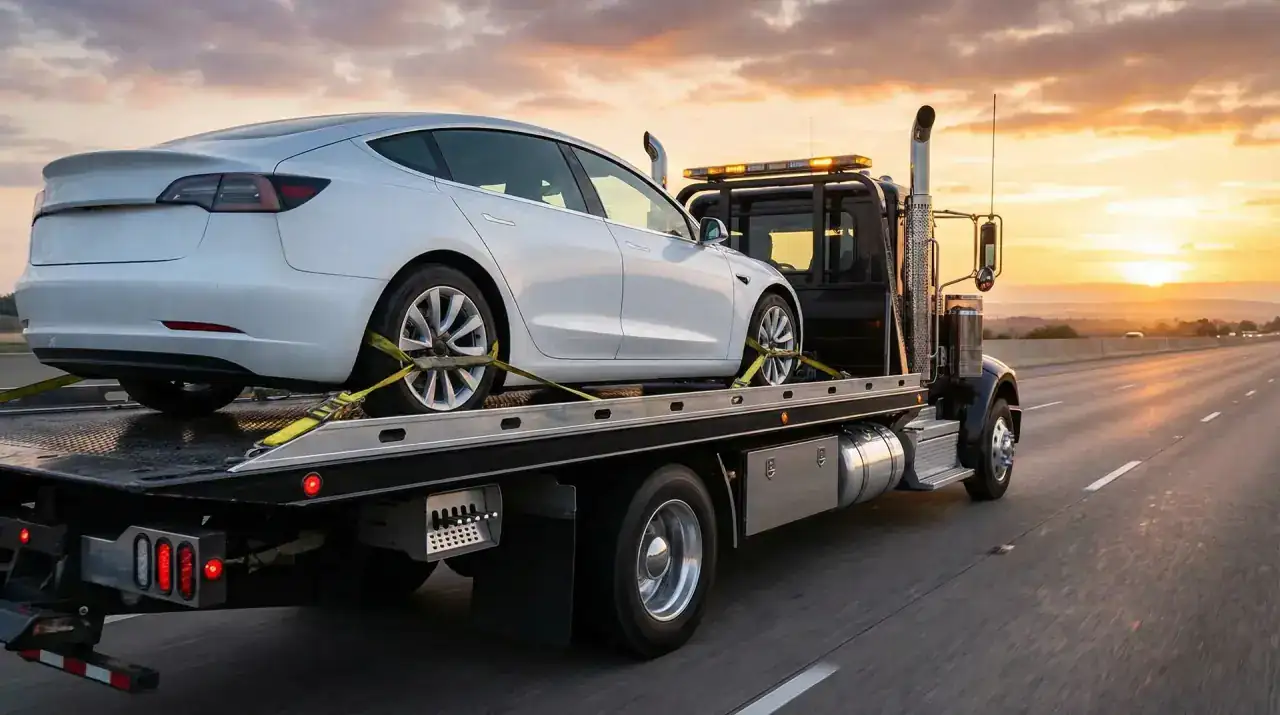
Every long-distance job we run goes on a flatbed. All four wheels sit on the bed for the whole trip, so the car puts on no miles, its tires do not wear and its transmission and drivetrain get no extra work. The car is held in place with soft straps over the tires rather than chains on the frame or suspension.
One thing a flatbed does not do in winter is keep the car clean. The car rides in the open, so expect road spray and some salt on it when it arrives. Plan on a wash soon after delivery, including the underside if you can find a car wash that offers it.
Plan the date around the weather
A winter move is easier when the car is not on the same tight schedule as everything else. A few habits help:
- Call early. Get a quote and a tentative pickup day as soon as you know your moving dates, not the night before the movers come.
- Leave a cushion. If you can, schedule the car to arrive a day or two after you do, so someone is there to receive it and a weather delay does not wreck your plans.
- Watch the forecast for the whole route, not just Columbus. Clear skies on I-70 near the airport tell you nothing about the weather several states away.
- Be ready to shift by a day. If a storm is coming, talk with dispatch about whether to move the pickup. Safety on the road comes ahead of the calendar, for your car and for the driver.
Get the car ready for pickup
Most of this takes less than an hour and saves trouble at both ends of the trip.
- Take photos in daylight. Walk around the car and photograph every side, the roof, the wheels and the dashboard with the mileage showing. We note the car's condition at pickup and again at delivery, and your own photos are a useful second record.
- Clear off snow and ice. Brush the roof, hood and trunk lid completely and scrape the windows. A slab of ice that slides off a car on a flatbed at highway speed is a hazard to every driver behind it.
- Empty the car. Take out valuables, paperwork, chargers, child seats you will need right away and anything loose in the trunk or cargo area. A car is not a moving box.
- Remove toll tags and garage remotes. A toll transponder left on the windshield can be read at toll plazas along the way. Pull it off and keep it with you.
- Take off roof boxes, bike racks and anything that sticks out. Fold the mirrors and lower any antenna that does not fold down by itself.
- Leave some fuel or charge, not a full tank. The car needs enough to be driven on and off the truck and to reach a station at the other end.
- Check the battery. A cold battery that is barely hanging on can make loading and unloading harder. If the car has been slow to start, tell dispatch, or get the battery tested before the move.
- Make sure it rolls. Parking brakes can freeze in place in cold, wet weather. If the car is stuck, will not roll, or has a flat tire, say so when you book so the driver comes prepared.
- Hand over a key. The driver needs a working key or fob. We unlock cars, but we do not cut or make keys, so if the only key is lost, solve that before pickup day.
Make the pickup and delivery spots easy to reach
A flatbed is long and needs room to load. On pickup day, shovel a clear path to the car, move other vehicles out of the way, and let us know about tight alleys, low trees, steep driveways or a street that does not get plowed early. Apartment lots and condo complexes sometimes have rules about large trucks, so check with the office ahead of time.
At the new address, someone should be there to meet the driver, look the car over and sign for it. If you will not be there yourself, give dispatch the name and phone number of the person who will.
Electric cars, low cars and motorcycles
Some vehicles need extra care, and long trips are exactly where it matters.
- Electric cars always travel with all four wheels off the ground, on a flatbed or on a wheel-lift with dollies, as the manufacturer allows. Tesla recommends a flatbed and allows dollies only for short distances, so a long trip rides on a flatbed. Our EV and Tesla towing page and our post on why electric cars need a flatbed or dollies explain the details. Charge the car to a comfortable level before pickup so it can be driven on and off the truck.
- Lowered and sports cars can scrape a front lip on a steep bed. Tell dispatch the car sits low so we can plan the loading angle; see our low-profile towing page and our guide to low-clearance cars in snow.
- Motorcycles ride upright on a flatbed with the front wheel in a chock and soft straps holding the bike. Our motorcycle towing page explains how it works.
What a long-distance tow costs
There is no separate long-distance price list. A long trip uses the same rate card as a tow across town: $4 per mile en-route from our yard to the car, a $125 hookup, and $7 for each mile the car is on the truck. Tax and any after-hours, weekend or highway surcharge are listed on our pricing page. Electric cars are quoted on the EV and Tesla rate card. Dispatch gives you the full price for your trip before anything is booked, so you can compare it with the cost of fuel, hotels and a lost day of driving.
If the car breaks down before moving day
Cold snaps have a way of killing batteries the week you are packing. If the car will not start, has a flat or slides off an icy street before the move, we can help with that too, and it is often the first sign the car should ride rather than be driven. As an estimate, not a promise, most metro calls are reached in 20–40 minutes, outer communities in 40–60. Packing up in Hilliard or elsewhere on the west or southwest side? Expect roughly 15–30 minutes. A Dublin driveway sits in the 20–40 minute band, while Westerville counts as an outer community at 40–60. Snow days can stretch any of them.
If a car broke down far from Central Ohio and needs to come back to a Columbus shop, the same service works in reverse. Call with the pickup address and the destination, and dispatch will quote the trip home.
Frequently asked questions
Is it better to tow or drive my car when moving in winter?
Driving is fine when the car is healthy, you have a driver for it and the forecast is good. A tow makes more sense when you have more cars than drivers, the car has a problem you do not trust on a long trip, it does not run, or it is a low car that should stay off snowy roads. Dispatch can quote the tow so you can compare it with fuel, hotels and time.
How do I get my car ready for a long-distance tow?
Photograph every side of the car and the dashboard mileage, clear all snow and ice off the roof and windows, and take out valuables, loose items and any toll transponder. Fold the mirrors, remove roof boxes and racks, and leave some fuel or charge so it can be driven on and off the truck. Tell dispatch if the car will not start, will not roll or has a flat.
How much does long-distance towing from Columbus cost?
It uses the same published rate card as a local tow: an en-route charge per mile from our yard, a hookup fee and a rate for each loaded mile, plus tax and any surcharge that applies. The current numbers are on our pricing page, and dispatch quotes the full price for your trip before anything is booked.
Can an electric car be towed long distance?
Yes. Electric cars travel with all four wheels off the ground, on a flatbed or a wheel-lift with dollies as the manufacturer allows, and long trips ride on a flatbed. Charge the car to a comfortable level before pickup so it can be driven on and off the truck.
What if a snowstorm hits on my pickup day?
Talk with dispatch about moving the pickup by a day. Safety on the road comes ahead of the schedule, which is why it helps to plan for the car to arrive a day or two after you do.
About this article: it is general advice for planning a winter vehicle move, drawn from everyday practice, with no outside statistics or rules quoted. Follow your owner's manual for your car's specifics, including any towing instructions from the manufacturer.
Moving out of Columbus this winter and need the car to follow you? Call (740) 812-9489 day or night for a quote, or read more on our long-distance towing page.