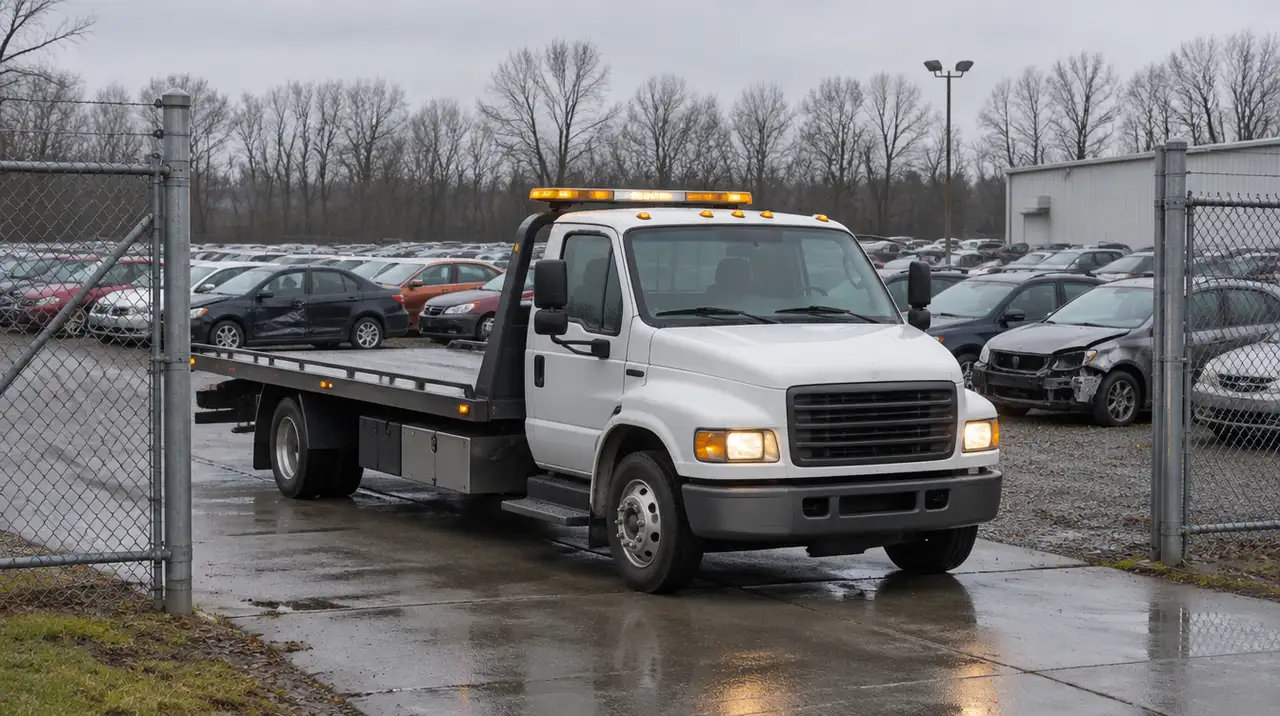
Not every crash ends with you choosing the tow truck. If a Columbus police officer impounded your car after a wreck, it is at the City's Police Impound Lot, and getting it out takes the right documents, the right hours and the right payment. This guide covers release day step by step. If you are reading this before the tow happens, our page on accident towing in Columbus explains how a car can go to our lot or your body shop instead when the officer lets you choose.
Everything below comes from the City of Columbus and Ohio law as published on November 6, 2026, with links. Fees and hours change, so check the City's pages the day you go. This is general information, not legal advice.
Why a crash car ends up at the impound lot
The Columbus Division of Police Directive 6.01 says impounded vehicles go to the Police Impound Lot. It also says that, unless the owner has arranged to move it in a timely manner, a vehicle on the freeway disabled from a crash or a disabled car creating a traffic hazard is impounded as soon as practical, and that a car is impounded when the owner or operator is incapacitated. Columbus City Code Chapter 2107 lists other reasons police may remove a vehicle, such as an arrested driver or a driver removed because of illness or injury.
A crash car with no legal reason to impound it does not always go to the City lot. When the owner has not called a company, the directive's stated preference is a tow to the private lot of the wrecker service police dispatch sends. Our guide to police-called tows after a crash in Columbus explains the difference; if your car went to a private company, call that company for its release rules and rates.
Step 1: Confirm the car is there
The City's Find My Vehicle page searches impounded vehicles online and lists the Police Impound Lot at 2700 Impound Lot Road, Columbus, OH 43207, phone (614) 645-4620, with impound hours of Monday through Friday, 10 a.m. to 4 p.m. If the search finds nothing, call the lot, then the officer or the non-emergency line, and ask where the car was taken and by which company.
Step 2: Check for a hold before you drive over
Some crash cars cannot be released right away. A car kept as evidence stays until the investigation releases it, and for a vehicle seized in an OVI case, the City's Impounded Vehicles page says only the judge assigned to the case can release it. Under Ohio Revised Code 4511.195, officers must seize the vehicle in certain repeat OVI arrests. Ask about a hold on the phone so you do not make the trip for nothing.
Step 3: Gather the documents
The City asks for proper identification, proof of ownership and payment of all applicable fees. The details on its page:
- ID: a physical card that is current or expired no more than 30 days.
- Ownership: the current vehicle registration or the title. The City says a vehicle released on a title alone must be towed out, and it does not accept a signed-over Ohio title.
- Someone else picking up, or an insurer's truck: the City lists a notarized Authorization of Release form; read the requirements on its page first.
Step 4: Know the fees the City publishes
On November 6, 2026, the City's Impounded Vehicles page listed:
- Towing fee: $125, with additional charges possible for vehicles over 7,000 pounds.
- Administrative fee: $30, only if certified notification has been sent.
- Storage fee: $18, only if certified notification has been sent.
- Any outstanding parking tickets and other associated towing fees.
Those numbers come from Columbus City Code Section 2107.06, which sets a $125 impound service charge for vehicles up to 7,000 pounds, storage of $18 for each 24 hours or fraction of a day for vehicles under 10,050 pounds, a $30 administrative processing fee, and higher charges for heavier vehicles. The same section says that when a car is held for safekeeping after the driver's illness or injury, storage starts on the fourth day, and Section 2107.07 provides for a refund when the owner is found not guilty or the charge is dismissed. The counter takes cash, major credit and debit cards and money orders payable to the Columbus City Treasurer, but not personal checks. Ask for an itemized total.
Ohio's PUCO towing caps in OAC 4901:2-24-03 are for private-property tows. They do not set the fees on police impounds, which come from the City.
Step 5: Do not let the notice clock run out
Ohio Revised Code 4513.61 has police send the owner and any lienholder certified notice that the vehicle will be declared a nuisance and disposed of if it is not claimed within ten days. On the City's fee list, the administrative and storage fees apply once certified notification has been sent. Waiting rarely helps; a quick release is usually the cheapest one.
Step 6: Get your belongings, even before the car
Need a car seat, medication or a work bag before you can pay for the release? Ohio Revised Code 4513.61 lets an owner retrieve personal items from a police-stored vehicle without taking the vehicle and without paying a fee, except items needed for a criminal investigation. The City lists personal property pickup at the lot on weekdays from 10 a.m. to 4 p.m., and says after-hours retrieval of essentials such as medication, car seats, ID, keys and documents is handled case by case through the call box at the gate.
Step 7: Inspect the car before you leave the lot
Walk around the car and look inside before you drive or tow it away. The City says any damage or missing-property claim must be made before you leave the impound lot, at the office near the entrance. Take photos either way.
Step 8: Get it home or to the shop
A crash car often cannot be driven off the lot, and the City says a car released on a title alone must be towed out. Once the City has released the car to you, call (740) 812-9489 and tell us you are at 2700 Impound Lot Road with the release in hand. We can take it to your driveway, your body shop or a collision shop in our auto repair partner network. We cannot release a car from the City lot or pay fees on your behalf; only the City does that. Our Columbus impound lot guide has the lot's hours, and the impound-release tow is priced from our rate card: a $125 hook-up, $7 per loaded mile and $4 per mile en-route. If you are billing the tow to an insurance claim, give us the claim number.
If the battery died while the car sat, a jump start may get it running; electric cars that will not wake need all four wheels off the ground, on a flatbed or a wheel-lift with dollies as the manufacturer allows.
Next time, if the officer lets you choose the tow company, the car can skip the City lot entirely. Our accident and collision towing page explains how that works, and our guide to finding a towed car covers private-property tows.
Frequently asked questions
How do I find out if my car is at the Columbus impound lot after a crash?
Use the City's Find My Vehicle search on columbus.gov, or call the Police Impound Lot at (614) 645-4620. If the car is not listed, ask the officer which company towed it, because a crash car that did not need to be impounded may be at a private wrecker's lot instead.
What do I need to get my car out of the Columbus impound lot?
The City asks for a physical photo ID that is current or expired no more than 30 days, the current registration or the title, and payment of the fees. It says a car released on a title alone must be towed out, and it does not accept a signed-over Ohio title or personal checks.
Can I get things out of my impounded car before paying?
Yes. Ohio Revised Code 4513.61 lets an owner retrieve personal items from a police-stored vehicle without paying a fee and without taking the vehicle, except items needed for a criminal investigation. The City lists weekday property pickup hours of 10 a.m. to 4 p.m.
Can you tow my car from the impound lot to a body shop?
Yes, once the City has released it to you. We cannot release the car or pay the City for you, but with the release in hand we can tow it from 2700 Impound Lot Road to your home or a body shop.
Sources, opened November 6, 2026: City of Columbus Impounded Vehicles and Find My Vehicle; Columbus Division of Police Directive 6.01; Columbus City Code Chapter 2107; Ohio Revised Code 4513.61; Ohio Administrative Code 4901:2-24-03. This post is general information, not legal advice.