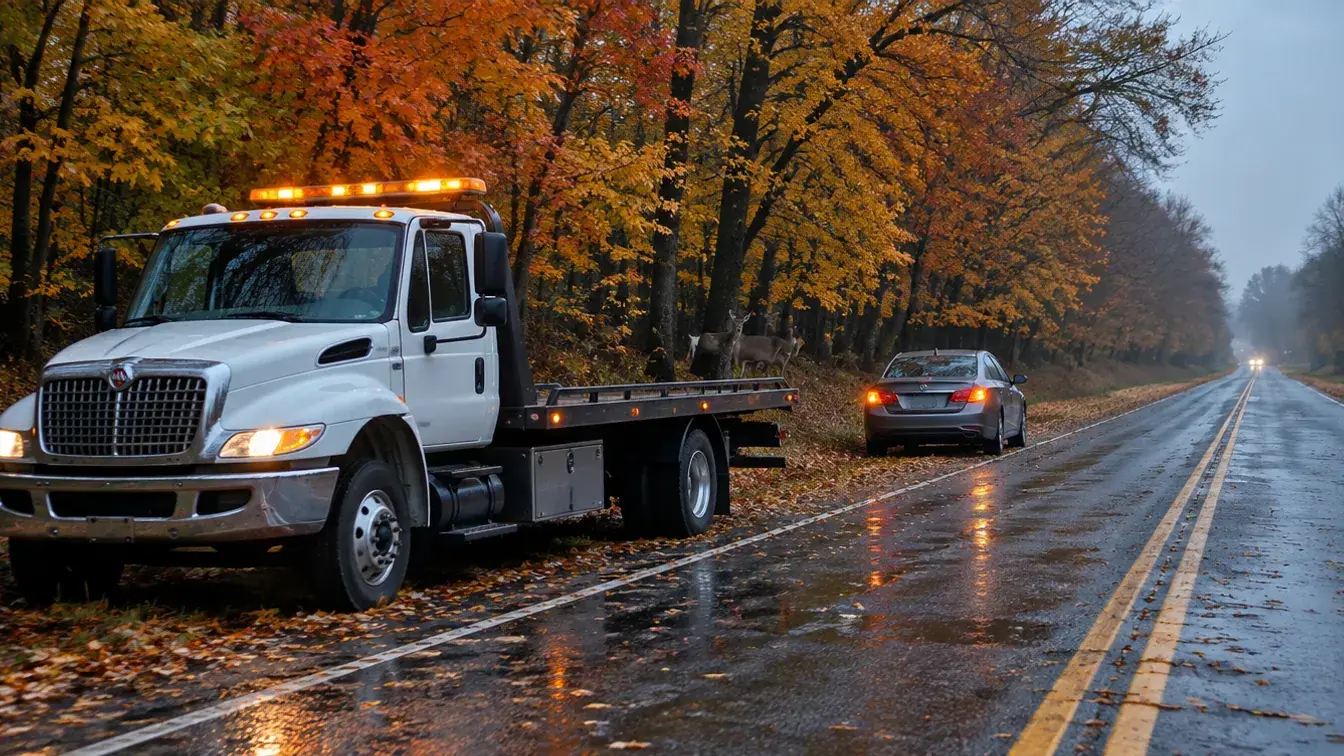
Most Columbus drivers find out their battery is weak the hard way: a cold morning, a slow groan from the engine, then nothing. The good news is that a failing battery almost always gives warning first, and a short test can tell you whether yours will last until spring.
This checklist covers the signs to watch for, what cold actually does to a battery, how long batteries tend to last, when to get yours tested, and what to keep in the car in case it quits anyway. To run the tests yourself with a multimeter, see how to test a car battery before winter.
1. The warning signs, in the order most drivers notice them
- A slower start. The engine takes an extra beat or two to catch, and the delay grows on cold mornings.
- Lights that flicker at startup. Headlights, dash lights or the dome light dip when the starter engages.
- A clicking sound. You turn the key or press the button and hear fast clicks instead of the engine turning.
- The battery light. A battery-shaped warning on the dash can mean the battery or the charging system, and either one deserves a test.
- Electrical oddities. A radio that forgets its presets, a clock that resets, or power windows that move slowly can all point to low voltage.
- A swollen or crusty battery. A case that bulges or terminals buried in white or green buildup belong to a battery in trouble.
One sign by itself is not proof, but two together heading into winter is reason enough to get the battery checked.
2. What cold does to a car battery
A lead-acid battery stores energy chemically and releases it as the acid reacts with the plates. When the temperature falls, that reaction slows and the battery can deliver less current, even when it is fully charged.
The engine works against you at the same time. Cold oil is thick oil, so the starter needs more current to turn the crankshaft fast enough for the engine to fire. Less supply and more demand meet on the first frozen morning of the season, which is why so many cars in Central Ohio refuse to start on the same day.
Heat plays a part as well. Summer heat speeds up the wear inside a battery, and that damage tends to surface once the weather turns, so a hot summer is often followed by a busy battery season.
3. How long do car batteries last?
A typical car battery lasts about three to five years, and some go longer. Short trips, a car that sits for days at a time, added electronics and hot summers all push it toward the short end of that range.
To find the age of yours, look for a date sticker or a stamped code on the case, which usually gives a month and a year. If you cannot find one and the battery has been in the car as long as you can remember, treat it as due for a test.
4. When to get your battery tested
- Before the first hard freeze, ideally in October.
- Any time the car has needed a jump, even once.
- When the battery is three years old or older.
- After a long stretch of sitting, such as a vacation or a car kept for weekends only.
- Whenever the battery light has come on, since that can mean the alternator is not charging.
A proper test puts the battery under load and checks the charging system rather than just reading the voltage. When we come out for a jump start, the test is included and you get the results as a printed report, so you know exactly where the battery stands.
If the report says the battery is finished, our mobile battery replacement service installs the right size where the car is parked, whether that is your driveway, a lot at work or a parking garage.
5. What to keep in the car this winter
- A phone charger that works from the car, plus a small power bank that is already charged.
- An ice scraper and a snow brush.
- Gloves, a hat and a warm blanket, in case you end up waiting.
- A flashlight with fresh batteries.
- A reflective triangle or flares to make the car easier to see on the shoulder.
- Our dispatch number saved in your phone: (740) 812-9489.
Jumper cables are worth carrying too, but only if you know how to use them safely. A battery that is cracked, swollen or leaking should never be jumped; leave the hood closed and call for help instead.
6. If the battery dies anyway
Stay safe first. If you are on the road, get as far onto the shoulder as you can, switch on the hazards, and wait in the car with your seat belt on when traffic is close.
Then call dispatch with your location and your vehicle. For a hybrid or an electric car, say so up front: we jump its 12V battery so the vehicle can wake up and go into transport mode, and if it will not, we tow it with all four wheels off the ground.
A jump start is a flat $75 plus en-route at $4 per mile from our yard, with the battery test included, and our rate card lists the after-hours and weekend surcharges. If the test says the battery needs replacing, it is priced by group size and quoted before any work starts.
Frequently asked questions
Can a battery test tell me if my battery will make it through winter?
A load test is the best predictor available. It shows whether the battery can still deliver starting power and whether the alternator is keeping it charged. A battery that passes comfortably in October is in good shape; one that barely passes is a candidate for replacement before the coldest weeks.
Is it bad to let a car sit during a Columbus winter?
A car that sits for a week or more in the cold loses charge, and a weak battery may not recover on its own. If you will not be driving it for a while, take it on a real trip every week or so, or have the battery tested before you park it.
Do you replace batteries at night or on weekends?
Yes. Dispatch runs around the clock, and the trucks carry the common battery sizes, so a battery that fails the test at night can usually be replaced on the same call. After-hours and weekend surcharges from the rate card may apply, and the dispatcher tells you before the truck rolls.
Want the battery checked before the cold sets in? Call (740) 812-9489 or send your location from the SOS request page.